What Is Food Intelligence About? (Short Answer)
Food Intelligence is not a diet book. It’s a science deep-dive into why eating “normally” feels so hard in 2025:
- how your metabolism really works
- what body fat actually does (spoiler: it’s not your enemy)
- why ultra-processed food quietly runs the show
- and why willpower alone was never going to save you
If you want a smart, compassionate, science-backed look at obesity, weight loss, and the modern food environment, this is it.
From Stardust to Supermarket: How We Got Here
The book opens with a simple idea:
we are literally stardust powered by sunlight. Plants trap sunlight and turn it into carbs, fats and protein. Animals eat plants. We eat both. Metabolism is the slow, quiet burn that keeps the lights on in your body.
So how did we go from that… to living in a world where:
- food is everywhere, all the time
- ultra-processed snacks follow us into pharmacies, gas stations, even hospitals
- and our bodies are struggling to keep up?
That’s the big question Food Intelligence keeps circling back to:
Our biology evolved for scarcity. Our reality is a permanent calorie glut.
Metabolism: Not a Moral Score, Just Chemistry
One of the most useful parts of the book is how it explains metabolism without drama.
You get:
- The famous Biggest Loser study: huge weight loss, brutal regain, scary headlines about “destroyed metabolism.”
- The calmer reality:
- yes, metabolic adaptation is real (your body becomes more efficient when you lose a lot of weight)
- no, you are not “metabolically ruined forever”
- the main problem is returning to the same food environment that made weight gain easy in the first place
Metabolism here is not treated like a personality trait (“fast” vs “slow” people), but like what it is:
Millions of tiny chemical reactions in your cells turning food + oxygen into energy.
No detox teas. No “metabolism boosters.” Just reality:
- movement matters (for health, appetite, long-term weight maintenance)
- but you can’t outrun a highly engineered food environment with a pair of sneakers and some guilt
Protein, Carbs, Fat: Less War, More Context
This book is refreshingly anti-diet-tribe.
Protein: Useful, Overhyped, and Very Marketable
Historically, protein was treated as the hero nutrient. We still see that:
- protein bars
- protein cookies
- protein cereal
- protein everything
The book doesn’t say protein is bad – far from it. It explains:
- why protein is important (muscle, hormones, enzymes, satiety)
- but also how “more protein!” became a convenient marketing hook for ultra-processed products that aren’t automatically healthy just because the label screams PROTEIN.
Carbs vs Fat: Not Angels and Demons
Instead of “carbs are evil” or “fat makes you fat,” you get:
- carbs and fats as flexible fuel sources
- the body constantly toggling between them
- low-carb vs low-fat weight loss differences shrinking when calories are controlled
The line you could practically tattoo on the cover:
Calories and environment drive weight change.
Macros shape satiety, health, and how easy it is to stay on track.
Body Fat: Your Overwhelmed Safety System, Not Your Enemy
One of the strongest chapters reframes body fat:
- Fat is your fuel tank, not a moral stain.
- It stores energy, insulates, protects organs, supports hormones, and is tightly tied to reproductive health.
The real issue isn’t “having fat.”
The real issue is where and how much:
- Everyone has an individual “safe storage capacity” in their fat tissue.
- Once those “closets” are full, fat starts getting stored in the wrong places (liver, muscle, pancreas).
- That’s when metabolic problems start creeping in – insulin resistance, fatty liver, type 2 diabetes risk.
So instead of “I’m disgusting, I let myself go,” the story shifts to:
“My storage system is overwhelmed in an environment that makes overeating incredibly easy. Some bodies hit that limit earlier than others.”
That’s a very different emotional starting point.
Hunger, Hormones, and Why Willpower Was Never Enough
The book then walks through hormones – insulin, leptin, ghrelin, and friends – as the conductor of the whole energy orchestra.
Key points:
- Hunger is biological, not a character defect.
- Dieting triggers predictable hormonal responses: more hunger, more food thoughts, less spontaneous movement.
- Some people are simply more biologically vulnerable:
- food feels louder in their brain
- reward circuits light up more
- they may have less “safe” fat storage capacity
This is huge for anyone stuck in shame:
If food feels like a constant fight, that doesn’t mean you’re weak. It means your biology + this environment is a particularly nasty combo.
The Food Environment: It’s Not Just You and Your Plate
Here’s where Food Intelligence goes fully systemic and very useful.
It makes a simple but brutal argument:
Most people are not overeating chicken breasts and apples.
They are overeating ultra-processed Food 2.0.
You get:
- a clear explanation of ultra-processed foods:
- engineered for bliss point (perfect combo of fat/sugar/salt)
- calorie dense, low in fiber and protein
- easy to eat quickly and in large amounts
- a reminder that these foods are:
- cheap
- aggressively marketed
- present literally everywhere
The book doesn’t let the industry off the hook:
- Our food system rewards shelf life, profit margins, and hyper-palatability, not long-term human health.
- People go on strict diets, lose weight, then re-enter the same environment and are shocked when the weight creeps back.
It’s not “diets don’t work.”
It’s diets versus systems – and systems are winning.
Imprecise Nutrition: Why the Science Looks So Messy
The authors are refreshingly honest about how hard nutrition science is:
- People misreport what they eat (not because they’re evil, but because humans are terrible at tracking).
- Long-term, well-controlled studies are expensive and slow.
- We often confuse correlation (people who eat X also happen to do Y) with causation.
They also talk about “nutritional dark matter”:
- All the little compounds in food (especially minimally processed plants) we barely understand yet
- All the ways food interacts with your microbiome, immune system, and brain
This leads to one of the most grounded takeaways:
The more we zoom in on single magic nutrients, the more we miss the big picture.
Overall diet pattern and processing level matter more than chasing one miracle ingredient.
The Calorie Glut: When Success Backfires
Humans spent most of history fighting famine.
We finally won that battle… and now we’re drowning in cheap, ultra-processed calories.
The book calls this the “calorie glut”:
- Calories are easier to get than ever.
- Movement is easier to avoid than ever.
- Our biology is still tuned for “store energy when you can, you might need it later.”
Mix those together and you get:
- rising obesity rates
- rising type 2 diabetes
- a lot of very confused, very ashamed people who think this is purely an individual failure story
So What Can We Actually Do? (Without Magic)
Food Intelligence doesn’t end with a cute list of “10 rules.”
Instead, it gently pushes two parallel tracks:
1. Personal Strategy (Your Side of the Street)
Things you can actually influence:
- Prioritize minimally processed food most of the time
- Build your meals around protein + fiber + volume so you’re not white-knuckling hunger all day
- Design your home environment to support your goals:
- default meals you can fall back on
- fewer “landmines” in the house
- pre-decided snacks that you’re okay with
- Focus on consistency and trend, not perfection and punishment
2. System Change (The Bigger Fight)
Things that require policy and culture shifts:
- better regulation of ultra-processed products and marketing, especially to kids
- aligning subsidies and pricing with actual health, not just yield and profit
- serious funding for independent nutrition research, not just industry-sponsored confusion
The big message is:
We need both: smarter individual choices and a less predatory food environment.
Final Take: Who Should Read Food Intelligence?
You’ll probably love this book (and be able to use it with clients) if:
- you’re tired of “just eat less, move more” slogans
- you want a compassionate, science-driven explanation of weight gain, obesity, and food addiction
- you need a way to talk about ultra-processed food, metabolism, and body fat without shaming people
In plain language, Food Intelligence says:
Your body isn’t broken.
Your willpower isn’t uniquely weak.
You’re a normal human, running ancient software, living in a hyper-engineered food world.
Let’s work with biology and against the worst parts of Food 2.0 – not against yourself.
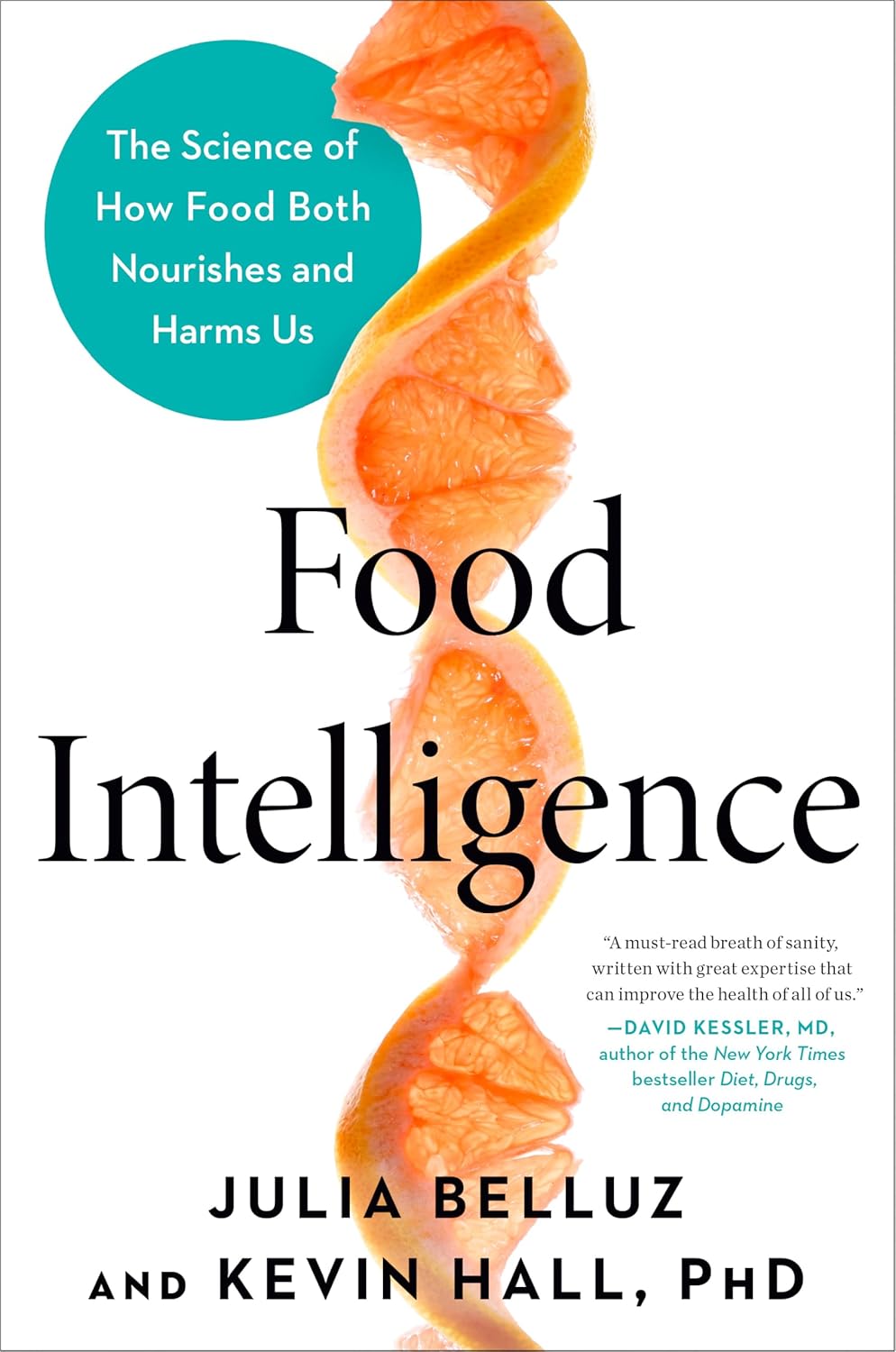
If you want to read the book, you’ll find it here (click below):
Also, if you want more help with weight loss & maintenance, you can find a lot of information in my guide here:
2 responses to “Stop Blaming Your Willpower: A No-BS Guide to Food Intelligence – Kevin Hall review”
-
Thanks for the thoughtful review of our book!
-
thank you very much for the comment!
-



Leave a Reply