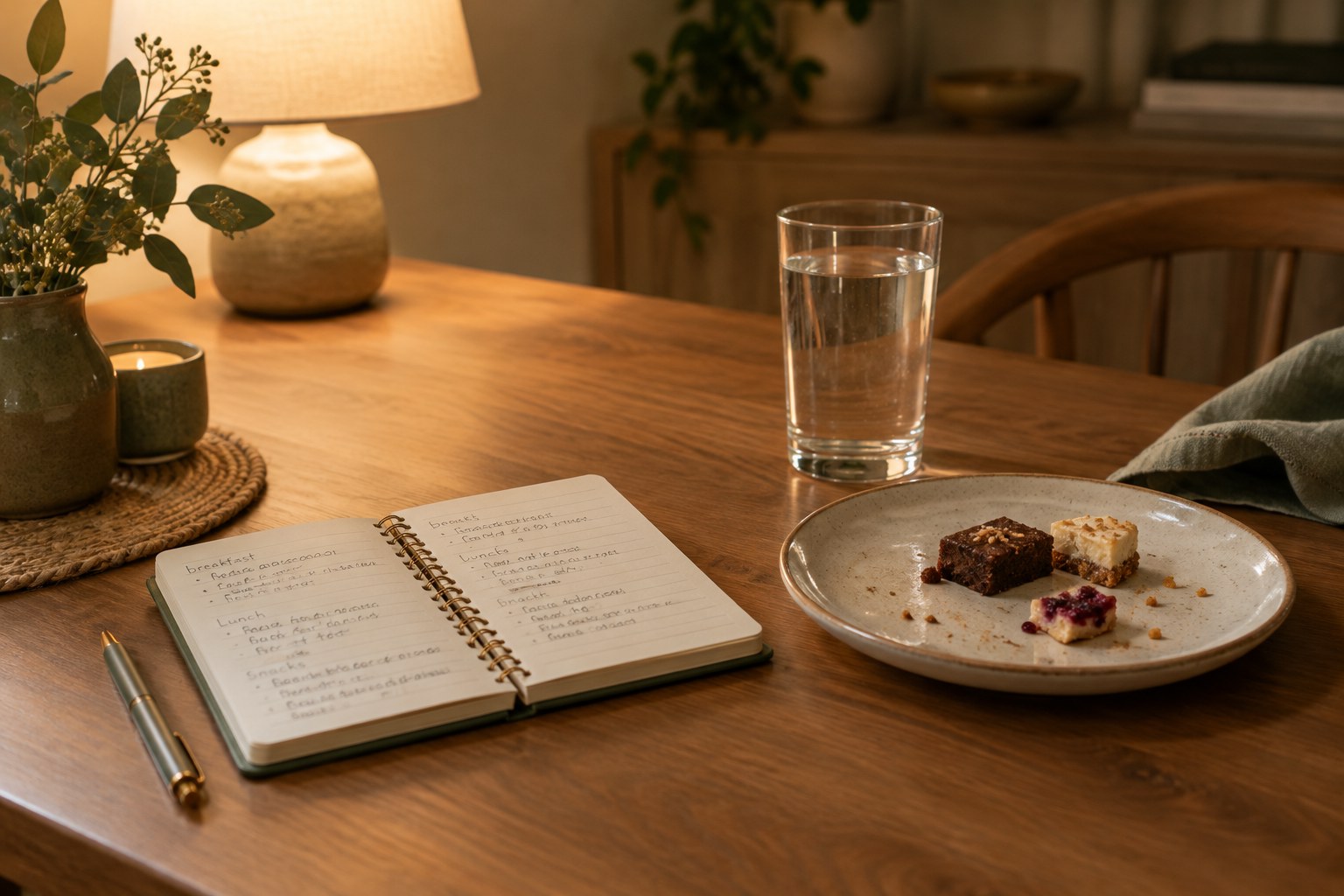
You manage to stick to your eating plan all day. Then evening comes, you open a packet of biscuits, and the thought appears: “I’ve ruined it. I might as well carry on.”
If this happens often, the most useful question may not be “How do I find more willpower?” Try asking what made the evening difficult, and what you can change before the same situation comes around again.
I know how frustrating this can feel. I have had difficult nights myself, including waking up and finding myself at the fridge. Learning to examine the pattern, and to return to my normal routine after a setback, helped me far more than treating each episode as a reason to give up.
Start with the food you ate earlier
Before you call the evening eating emotional or impulsive, consider whether you have eaten enough. Was lunch satisfying? Did you go a long time without food? Did you try to keep your meals as small as possible in the hope of losing weight faster?
If you arrive at dinner hungry and tired, it makes sense that food is appealing. Experiment with a more substantial lunch, an afternoon snack or a dinner that leaves you satisfied. A planned evening snack can fit into a weight-loss or maintenance routine too. Eating in the evening is not automatically a problem.
Listen to the thought that comes before the next bite
Sometimes you have eaten enough but still want the comfort or reward that food offers. There is nothing wrong with enjoying it. The difficulty is when the decision starts to feel automatic or leaves you uncomfortably full and discouraged.
Notice what you tell yourself. You might think: “I’ve had a hard day. I deserve this.” You do deserve a pleasant evening. You can choose to eat something you enjoy. You also deserve to consider how you want to feel afterwards and what matters to you in the longer term.
Another common thought is: “I’ve already eaten one biscuit. The day is ruined.” One biscuit—or one unplanned snack—does not erase your progress. What you choose to do next still matters, and you can make that choice without criticizing yourself.
Write a response you can believe
Prepare a short response card while you are calm. Put it somewhere you will find it when you need it. For example:
“I want more right now. I can choose to eat it, but I do not have to continue simply because I started. I can pause and decide what I want next.”
Change the words until they sound natural to you. A useful response does not have to make the urge disappear. It gives you another thought to consider before you act.
You can also write down your personal reasons for pursuing your goal. Perhaps you want more energy, greater confidence or a less stressful relationship with food. Read your list regularly, especially when those reasons feel far away.
Make an evening plan that fits your life
Think about an evening that tends to be difficult. Decide on a realistic dinner and, if you often need one, a snack you can sit down and enjoy. If you tend to use food as your main way to unwind, choose another option you might actually find pleasant: a short walk, a shower, a conversation or a few pages of a book.
This is not a test you must pass. Hunger and a need for comfort can happen together. You might need a snack and a break. Try a plan for a few evenings and adjust it based on what you learn.
What if you eat more than planned?
Return to your usual meals. You do not need to compensate by skipping food the next day. Instead, ask: “What happened before I started eating? What was I thinking? What would make tomorrow a little easier?”
Maybe your meals were too small. Maybe your plan was too restrictive. Maybe you were exhausted, or the thought that you had “ruined everything” made it harder to stop. Pick one change and practise it. If the pattern repeats, that is information you can use to refine the plan.
Weight maintenance does not require a perfect record. It requires a routine you can return to when life gets complicated.
If eating episodes regularly feel out of control or cause significant distress, consider talking with a qualified health professional for individual support.
For more on responding after a setback, read what to do after overeating.
More support
I’m Costin Liculescu, and at Mindset Over Menu I help people work on the thoughts and habits involved in weight loss and long-term maintenance. Explore my Udemy course or join the Mindset Over Menu community. For individual coaching, contact me at +40 752 578 044.
My book Lose It. Keep It Off. Live It. is about weight loss and maintenance. My book How to Do Hard Things: The Discomfort Trap explores handling discomfort while working towards something that matters. It is also available in audio on Spotify and ElevenReader.