
You’ve tried diet after diet, only to watch the weight creep back. This guide offers a research-backed, stepwise approach that prioritizes mindset coaching and sustainable behavior changes to help you break free from emotional eating patterns and achieve lasting weight loss success.
Table of Contents
- Prerequisites For Starting A Sustainable Weight Loss Plan
- Step 1: Establish A Mindset Foundation And Emotional Regulation
- Step 2: Build Practical Habits And Behavioral Changes
- Step 3: Integrate Tracking And Progress Monitoring
- Step 4: Troubleshooting Common Mistakes And Psychological Barriers
- Step 5: Expected Results And Realistic Benchmarks
- Step 6: Safety Considerations And Alternative Approaches
- Discover Mindset Coaching Programs For Lasting Weight Loss Success
- Frequently Asked Questions
Key takeaways
| Point | Details |
| Prerequisites establish readiness | Assess your baseline emotional eating behavior and gather self-monitoring tools before starting active weight loss efforts. |
| Mindset coaching addresses root causes | Identify emotional triggers and use mindfulness and CBT techniques to reduce emotional eating episodes. |
| Habit formation requires patience | New behaviors need multiple days of consistent repetition to become automatic sustainable habits (or routines). |
| Tracking enhances accountability | Regular self-monitoring of weight, mood, and behaviors improves long-term maintenance. |
| Realistic goals prevent setbacks | Aim for 1-2 pounds per week and 7-10% body weight loss over 3-6 months for sustainable results. |
Prerequisites for starting a sustainable weight loss plan
Before diving into active weight loss efforts, you need a solid foundation. Assessing your readiness to change helps personalize interventions and improves outcomes. Understanding your baseline emotional eating patterns allows you to identify specific triggers and create targeted strategies.
Gather essential self-monitoring tools like smartphone apps, journals, or wearable trackers. These tools will become invaluable for tracking progress and maintaining accountability. Most importantly, adopt a patient mindset that values gradual, sustainable changes over quick fixes.
Consider these foundational elements:
- Evaluate your current emotional eating frequency and common triggers
- Download a food and mood tracking app or prepare a physical journal
- Set aside 10-15 minutes daily for self-reflection and planning
- Establish realistic timeframes, understanding that sustainable change takes months, not weeks
- Connect with Mindset Over Menu resources to support your journey
Starting with realistic expectations prevents disappointment and builds the mental resilience you’ll need. You’re not just changing what you eat; you’re transforming your relationship with food and emotions.
Step 1: Establish a mindset foundation and emotional regulation
Emotional eating stems from using food to cope with stress, sadness, boredom, or anxiety. Identifying your specific triggers is the first critical step. Common triggers include work stress, relationship conflicts, loneliness, and negative self-talk.
Mindfulness and cognitive behavioral therapy techniques are powerful tools. These approaches help you pause between emotional triggers and eating responses, creating space for conscious choices.
Replace negative self-talk with constructive reframing. Instead of “I have no willpower,” try “I’m learning new coping skills.” Challenge cognitive distortions like all-or-nothing thinking that sabotage progress.
Develop healthier emotional coping routines alongside behavior change:
- Practice deep breathing exercises when stress hits
- Take a brief walk to process emotions physically
- Call a friend or write in a journal to express feelings
- Engage in a hobby that requires focus and provides satisfaction
- Use the mindset coaching for weight loss strategies to build emotional resilience
Pro Tip: Practice a five-minute mindfulness meditation each morning. This brief daily practice helps you recognize emotional eating triggers before they lead to unconscious overeating.
Step 2: Build practical habits (and routines) and behavioral changes
Habits and routines form the backbone of sustainable weight loss.

Start with small, manageable behavior goals. Instead of overhauling your entire diet overnight, focus on one or two changes at a time. This incremental approach improves adherence and prevents overwhelm.
Follow these steps to build lasting habits:
- Choose one specific behavior to change, such as eating breakfast daily or drinking water before meals
- Link the new habit to an existing routine, creating a natural trigger
- Track your daily completion using a simple checkmark system
- Celebrate small wins to reinforce positive momentum
- Only add a second habit once the first becomes effortless
Self-monitoring increases awareness and motivation. When you record what you eat and how you feel, patterns emerge that guide better decisions. Focus on flexible, real-life applicable habits rather than rigid rules that break under pressure.
Use environmental cues and reminders to support new behaviors. Place healthy snacks at eye level, set phone alarms for meal times, or prep ingredients on Sunday for easier weekday cooking. Explore habit formation strategies that fit your lifestyle.
Pro Tip: Stack new habits onto existing ones. If you already drink coffee each morning, add a five-minute stretching routine right after. This technique leverages established neural pathways to accelerate habit formation.
Step 3: Integrate tracking and progress monitoring
Regular self-monitoring transforms abstract goals into measurable progress. Self-monitoring of weight and behaviors improves long-term weight loss maintenance, making it an effective tool for your goal.
| Tracking Method | Benefits | Best For |
| Smartphone apps | Automated tracking, data visualization, reminders | Tech-comfortable users wanting comprehensive analytics |
| Paper journal | Deep reflection, no screen time, personal connection | Those who prefer writing and tactile engagement |
| Wearable devices | Activity tracking, sleep monitoring, heart rate data | Users focused on holistic health metrics |
| Photo logs | Visual accountability, meal pattern awareness | Learners who struggle with detailed logging |
Analyze your data weekly to uncover patterns. Notice when emotional eating occurs most frequently and what circumstances precede it. Adjust strategies when you hit plateaus or face setbacks. If weekend eating consistently derails progress, plan specific coping strategies for Friday through Sunday.
Watch for emotional setbacks like increased stress or mood dips. These signal the need to apply coping techniques promptly before they trigger prolonged overeating. Use weight loss tracking techniques to stay accountable and informed.
Step 4: Troubleshooting common mistakes and psychological barriers
Even with the best intentions, psychological barriers derail progress. Unrealistic goal setting, poor emotional coping, and inconsistent habit formation are common failure points in weight loss efforts.
Avoid setting overly ambitious goals like losing 20 pounds in a month. These rushed timelines create frustration and increase the likelihood of giving up entirely. Instead, focus on process goals like “practice mindful eating at three meals daily” rather than outcome goals fixated solely on the scale.
Develop robust emotional coping strategies to handle stress triggers without turning to food:
- Create a written list of non-food stress relievers you can reference during tough moments
- Practice the STOP technique: Stop, Take a breath, Observe your feelings, Proceed mindfully
- Build a support network of friends, family, or a coach who understands your journey
- Schedule regular self-care activities that prevent stress from accumulating
Combat all-or-nothing thinking through cognitive reframing. One imperfect meal doesn’t ruin your progress. View setbacks as learning opportunities that provide valuable data about your triggers and vulnerabilities. Use mindset coaching fixes to address these cognitive challenges.
Accountability significantly reduces relapse risk. Whether through professional coaching, a supportive friend, or an online community, having someone who checks in regularly keeps you engaged during challenging periods.
Step 5: Expected results and realistic benchmarks
Setting realistic expectations prevents discouragement and supports long-term commitment. Sustainable weight loss occurs at a rate of one to two pounds per week for most people. Faster losses often involve muscle loss and water weight that quickly returns.
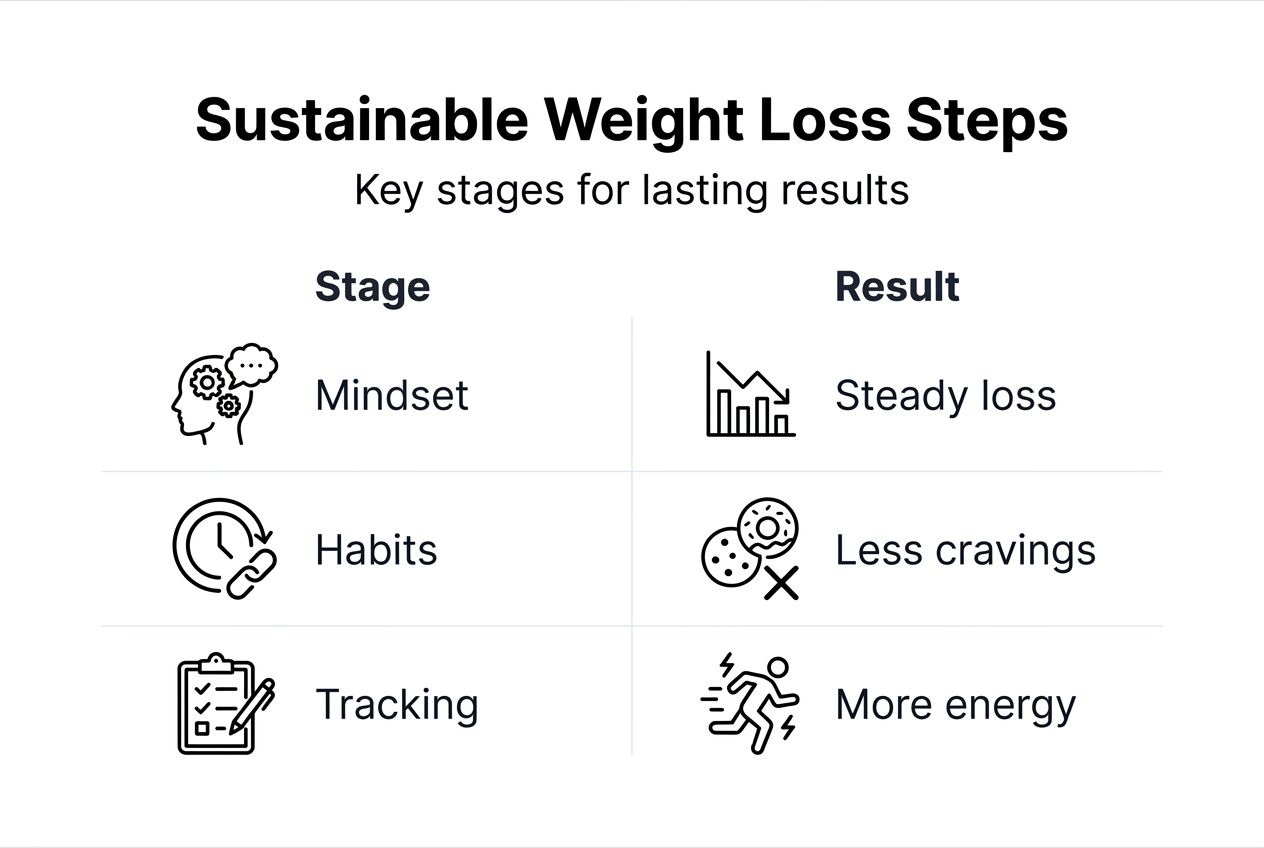
Expect to lose 7-10% of your body weight over three to six months when combining mindset coaching with behavioral changes. For a 200-pound person, this means 14-20 pounds, a significant amount that can improve health markers and boosts confidence.
Track reductions in emotional eating frequency as a success indicator beyond the scale. Notice improved energy, better sleep, enhanced mood stability, and increased confidence in social situations. These non-scale victories often emerge before significant weight changes.
Patience and steady progress foster long-term maintenance. People who lose weight gradually and develop strong coping skills maintain their results far better than those who crash diet. Use realistic weight loss benchmarks to guide your expectations and celebrate appropriate milestones.
Step 6: Safety considerations and alternative approaches
Rapid weight loss carries serious health risks. Rapid weight loss diets cause increased risk of weight cycling.
Consult healthcare providers before starting any weight loss program if you have preexisting conditions like diabetes, heart disease, eating disorders, or take medications that affect weight. Your doctor can monitor progress and adjust treatments as needed.
Consider alternative approaches based on your psychological needs and preferences:
- Intuitive eating focuses on internal hunger cues and rejecting diet culture, offering psychological benefits but typically producing slower, less quantifiable weight loss
- Structured behavioral programs provide measurable progress and clear guidelines, ideal for those who thrive with specific targets and accountability
- Hybrid approaches combine mindset work with flexible eating frameworks, balancing structure and psychological flexibility
Choose an approach that aligns with your values, lifestyle, and health goals. Learn more about mindset approaches that prioritize sustainable behavior change over quick fixes.
Discover mindset coaching programs for lasting weight loss success
You’ve learned the step-by-step framework for sustainable weight loss through mindset and behavioral change. Now take the next step toward lasting transformation with expert guidance designed specifically for your challenges.
Mindset Over Menu offers tailored coaching that addresses the emotional eating patterns holding you back. Our programs combine proven psychological techniques with practical habit-building strategies to help you achieve and maintain your weight loss goals without restrictive dieting.
Explore the lose the weight keep it off program for comprehensive support in transforming your relationship with food. Discover healthy eating mindset tips that make sustainable choices feel natural and empowering. Join a supportive community committed to real, lasting change that goes far beyond the number on the scale.
Frequently asked questions
What are effective quick strategies to resist emotional eating urges?
Use the STOP technique: Stop what you’re doing, Take three deep breaths, Observe your emotions without judgment, and Proceed with a conscious choice. Alternatively, delay eating for 10 minutes while engaging in a distracting activity like walking or calling a friend, which often allows the urge to pass naturally.
Can mindset coaching help if I have a history of repeated dieting failures?
Absolutely. Mindset coaching specifically addresses the psychological barriers and emotional eating patterns that cause traditional diets to fail. By focusing on underlying triggers and developing coping skills, you break the cycle of temporary success followed by regain.
How do I adjust my plan if weight loss plateaus or stalls?
Review your tracking data to identify patterns like weekend overeating or stress-triggered binges. Adjust portion sizes slightly, increase physical activity, or focus more intensely on emotional coping strategies. Sometimes plateaus signal the need to prioritize habit maintenance before pushing for additional loss.
Recommended
- Mindset Over Menu
- Lose the Weight. Keep It Off. For Real. – Mindset Over Menu
- I Really Want to Eat Well… But I Don’t Have To – Mindset Over Menu
- How to Stop Overeating at Christmas: The “Diet Trap” Reset (Mindset + Practical Strategies) – Mindset Over Menu