
Most people have tried at least one diet that worked brilliantly for two weeks and then completely fell apart. The frustration isn’t a personal failure. It’s a design flaw in the approach itself. Sustainable weight loss means gradual, long-term reduction in body weight through lifestyle changes you can actually maintain. That’s a very different goal than losing 10 pounds before a vacation. This article breaks down exactly what sustainable weight loss looks like, why emotional eating is a critical piece of the puzzle, and how to build a realistic plan that works in your actual life.
Table of Contents
- What is sustainable weight loss?
- Key components: Nutrition, movement, and behavior change
- Why emotional eating matters and what works instead
- Benchmarks: What does success look like?
- Rapid versus gradual weight loss: Risks and realities
- Your sustainable weight loss action plan
- Transform your approach to weight loss with Mindset Over Menu
- Frequently asked questions
Key Takeaways
| Point | Details |
|---|---|
| Slow and steady wins | Losing 1-2 pounds a week with sustainable habits is best for lasting results. |
| Mindset is essential | Addressing emotional eating and building new habits is key to success. |
| Benchmarks matter | Losing 5-10% of your starting weight produces meaningful health benefits. |
| Relapse is normal | Ongoing support and habit maintenance can help prevent weight regain. |
What is sustainable weight loss?
Sustainable weight loss isn’t a specific diet or a 30-day challenge. It’s a shift in how you live. The research is clear: losing 1 to 2 lbs per week through a moderate calorie deficit, balanced nutrition, and regular activity is the gold standard for keeping weight off long term.
Rapid approaches often produce dramatic early results, but they rarely stick. Your body adapts, your motivation drops, and the habits you built during the diet don’t transfer to real life. That’s why weight loss mindset strategies matter just as much as the food on your plate.
Here’s what sustainable weight loss actually focuses on:
- Gradual progress at 1 to 2 lbs per week
- Balanced nutrition that doesn’t eliminate entire food groups
- Regular physical activity that fits your schedule
- Behavioral habits that replace old patterns with new ones
- Emotional awareness around food choices
“The goal isn’t to be perfect for 30 days. The goal is to be consistent for 30 years.”
A holistic weight loss approach addresses your body, your habits, and your mindset together. That’s what separates people who maintain their results from those who cycle through the same 20 pounds repeatedly. For a deeper look at how this plays out in everyday situations, the real-life weight loss guide is a great starting point.
Pro Tip: Don’t judge your progress by the scale alone. Track energy levels, sleep quality, and how your clothes fit. These signals often reflect real change before the numbers move.
Key components: Nutrition, movement, and behavior change
Think of sustainable weight loss as a three-legged stool. Nutrition, movement, and behavior change each hold it up. Remove any one of them and the whole thing tips over. Healthy eating, 150+ minutes of activity per week, and behavioral interventions are the core pillars of long-term weight maintenance.
| Component | What it looks like | Why it matters |
|---|---|---|
| Nutrition | Vegetables, whole grains, lean proteins, healthy fats | Fuels your body without excess calories |
| Movement | 150+ min/week moderate activity plus resistance training | Burns energy, preserves muscle, boosts mood |
| Behavior change | Self-monitoring, goal setting, social support | Builds the habits that make everything else stick |
Building daily weight management habits is where most people underinvest. They focus on the perfect meal plan but skip the habit infrastructure that makes the plan survivable on a Tuesday night when you’re exhausted.
Here’s what behavioral support actually looks like in practice:
- Tracking meals without obsessing over every calorie
- Setting small, specific goals instead of vague intentions
- Building a support network of people who understand your goals
- Celebrating non-scale wins like cooking at home more often
If you’re just getting started, weight loss habits for beginners offers a practical entry point. And for those ready to go deeper, healthy weight loss habits covers the long-game strategies that actually compound over time.
Pro Tip: Resistance training is non-negotiable for sustainable results. Muscle tissue burns more calories at rest than fat tissue does, so building it protects your metabolism as you lose weight.
Why emotional eating matters and what works instead
You can have the best meal plan in the world and still find yourself standing in front of the fridge at 10 p.m. after a stressful day. That’s emotional eating, and it’s far more common than most people admit. Up to 57% of adults with obesity experience emotional eating as a regular pattern.

Emotional eating is driven by feelings, not hunger. Stress, boredom, loneliness, and anxiety are the most common triggers. The food provides temporary relief, but the underlying emotion stays unresolved, which sets up the next cycle.
| Emotional eating signal | Physical hunger signal |
|---|---|
| Comes on suddenly | Builds gradually |
| Craves specific comfort foods | Open to various foods |
| Doesn’t stop when full | Stops when satisfied |
| Followed by guilt | Followed by satisfaction |
The good news is that proven tools exist to break this cycle. Mindfulness-based interventions, cognitive behavioral therapy (CBT), and intuitive eating all show strong results for managing emotional eating and building healthier habits. Here’s how to apply them:
- Pause before eating and ask yourself if you’re physically hungry or emotionally triggered
- Name the emotion you’re feeling without judgment
- Use a non-food coping strategy like a short walk, journaling, or calling a friend
- Practice mindful eating by slowing down and removing distractions during meals
- Work with a coach or therapist if the patterns feel deeply ingrained
“Emotional eating isn’t a willpower problem. It’s a coping strategy that once worked and now doesn’t.”
Learning to curb stress eating starts with recognizing the trigger before the behavior kicks in. The mindset shift tips and mindset shifts for emotional eaters resources go deeper on building that awareness. For a more tailored approach, personalized weight loss approaches can help you identify your specific patterns.
Benchmarks: What does success look like?
One of the biggest reasons people give up is that they set unrealistic expectations and then feel like failures when they don’t hit them. Research gives us actual benchmarks worth knowing.
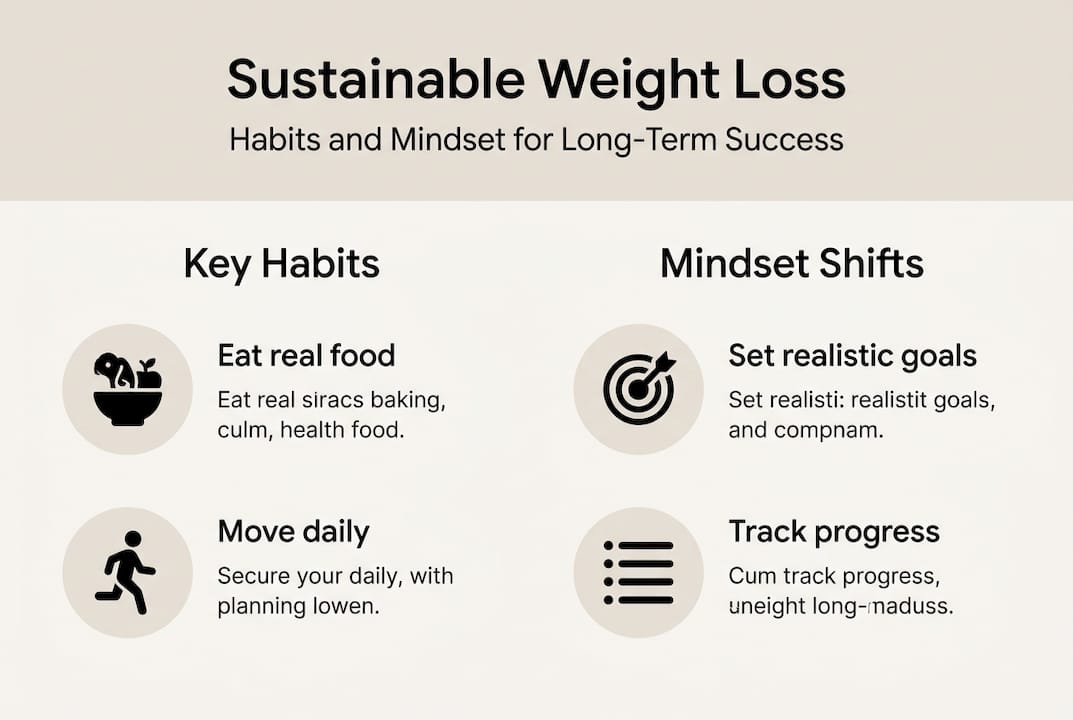
A 5 to 10% reduction in body weight is considered clinically significant. That means meaningful improvements in blood pressure, blood sugar, and cholesterol. For a 200-pound person, that’s just 10 to 20 pounds.
Data from the National Weight Control Registry (NWCR), one of the largest studies of successful weight loss maintainers, shows that participants lost an average of 30 lbs and kept it off for more than 5 years. What did they have in common?
- Consistent self-monitoring, including regular weigh-ins
- High levels of physical activity, averaging about an hour per day
- Eating breakfast regularly
- Low-calorie, low-fat eating patterns
- Catching weight regain early and adjusting quickly
| Milestone | What it signals |
|---|---|
| 5% body weight lost | Measurable health improvements begin |
| 10% body weight lost | Significant reduction in metabolic risk |
| 1 year of maintenance | Strong predictor of long-term success |
| 5+ years maintained | Considered durable, lasting weight loss |
Regain is common without ongoing maintenance. A step-by-step weight loss guide can help you build the structure that prevents it. And if you’ve already experienced regain, overcoming setbacks in weight loss explains why it happens and how to recover without starting from scratch.
Rapid versus gradual weight loss: Risks and realities
Fast results feel motivating. Seeing the scale drop quickly gives you a sense of momentum. But rapid weight loss risks muscle loss, metabolic slowdown, and almost inevitable regain. Losing more than 2 lbs per week consistently usually means you’re losing muscle alongside fat, which slows your metabolism and makes future weight loss harder.
Here’s what the research shows about both approaches:
- Rapid loss (more than 2 lbs/week): Higher risk of nutrient deficiencies, muscle loss, gallstones, and rebound weight gain
- Gradual loss (1 to 2 lbs/week): Safer, supports habit formation, and preserves lean muscle mass
- Very low calorie diets: May be medically appropriate in specific cases but require supervision
“Slow progress isn’t failure. It’s your body adapting in a way that actually lasts.”
That said, rapid loss isn’t always harmful in the short term. Some people find early momentum motivating, and a structured initial phase can help build confidence. The key is transitioning quickly to a sustainable approach rather than staying in extreme restriction. Building lasting weight loss habits during any weight loss phase is what determines whether the results stick.
Your sustainable weight loss action plan
Knowing the principles is one thing. Putting them into practice is another. Here’s a practical blueprint that combines everything covered above into a sequence you can actually follow.
- Set a realistic goal. Aim for 5 to 10% of your current body weight as your first target. It’s achievable and clinically meaningful.
- Build a balanced eating plan. Include vegetables, whole grains, lean proteins, and healthy fats. Don’t eliminate foods you love. Restriction breeds obsession.
- Move more every day. Start with 30 minutes of moderate activity five days a week. Add resistance training twice a week as you build consistency.
- Track your progress. Use a journal, app, or simple notes to monitor meals, activity, and mood. Self-monitoring is one of the strongest predictors of success.
- Build your support system. Tell someone about your goals. Join a community. Consider working with a coach.
- Address emotional triggers. Identify your top two or three emotional eating triggers and create a specific non-food response for each one.
Following intuitive eating principles alongside this plan helps you reconnect with your body’s actual hunger and fullness signals, which makes the whole process feel less like a battle. The daily habits for weight management resource gives you specific routines to anchor these steps into your day. For those just starting out, habits for beginners breaks it down even further.
Successful long-term weight loss consistently comes down to combining eating, activity, monitoring, support, and mindset. No single element is enough on its own.
Pro Tip: Review your goals every two weeks. Not to judge yourself, but to adjust. Life changes, and your plan should too. Flexibility is a feature, not a flaw.
Transform your approach to weight loss with Mindset Over Menu
If this article resonated with you, it’s because you already sense that the missing piece isn’t another diet. It’s the mindset, habits, and emotional awareness that make everything else work. That’s exactly what Mindset Over Menu is built around.
Whether you’re dealing with emotional eating, struggling to stay consistent, or just tired of starting over, the resources here meet you where you are. Explore weight loss mindset strategies to strengthen your mental approach, learn how to handle overcoming setbacks without losing momentum, and use mindset shift tips to rewire the patterns that have held you back. Lasting results are built one habit at a time, and you don’t have to figure it out alone.
Frequently asked questions
How much weight can I safely lose per week?
A safe and sustainable rate is about 1 to 2 pounds per week for most adults. Going faster increases the risk of muscle loss and metabolic slowdown.
Why do people regain weight after dieting?
Weight regain happens when the diet ends but the habits don’t continue. Long-term maintenance depends on keeping the behavioral changes in place, not just the calorie restriction.
Is emotional eating really a major problem?
Yes. Up to 57% of adults with obesity experience emotional eating regularly, making it one of the most significant barriers to sustainable weight loss.
Do rapid diets work for sustainable results?
Rapid diets can produce fast initial results, but rapid loss risks muscle loss, metabolic slowdown, and regain. They rarely lead to lasting change without a transition to sustainable habits.
Recommended
- How to maintain weight loss: mindset strategies 2026
- Daily habits for weight management: sustainable strategies
- Real-life weight loss guide: 5-10% success in 2026
- Weight loss habits for beginners: build lasting routines 2026