
Table of Contents
- Understanding Personalized Weight Loss
- The Role Of Emotional Eating In Weight Management
- Mindset And Habit Formation As Pillars Of Personalization
- Common Misconceptions About Personalized Weight Loss
- Practical Frameworks For Applying Personalized Weight Loss
- Bridging Understanding To Sustainable Weight Loss Success
- Discover Personalized Weight Loss Coaching Designed For Lasting Change
- Frequently Asked Questions
Key takeaways
| Point | Details |
| Personalized weight loss tailors strategies to your unique behaviors, emotions, and physiology | Generic diets ignore individual psychological factors that determine success. |
| Emotional eating can increase calorie intake with a lot of calories | Stress-driven eating undermines even the most carefully planned diets. |
| Mindset coaching boosts helpful habit retention | Addressing psychological barriers creates sustainable behavioral change. |
| Genetic testing is optional for personalization | Behavioral and emotional factors often drive greater improvements than genetics alone. |
| Practical frameworks integrating mindset produce lasting results | Stepwise approaches combining triggers, coaching, and habits improve adherence significantly. |
Understanding personalized weight loss
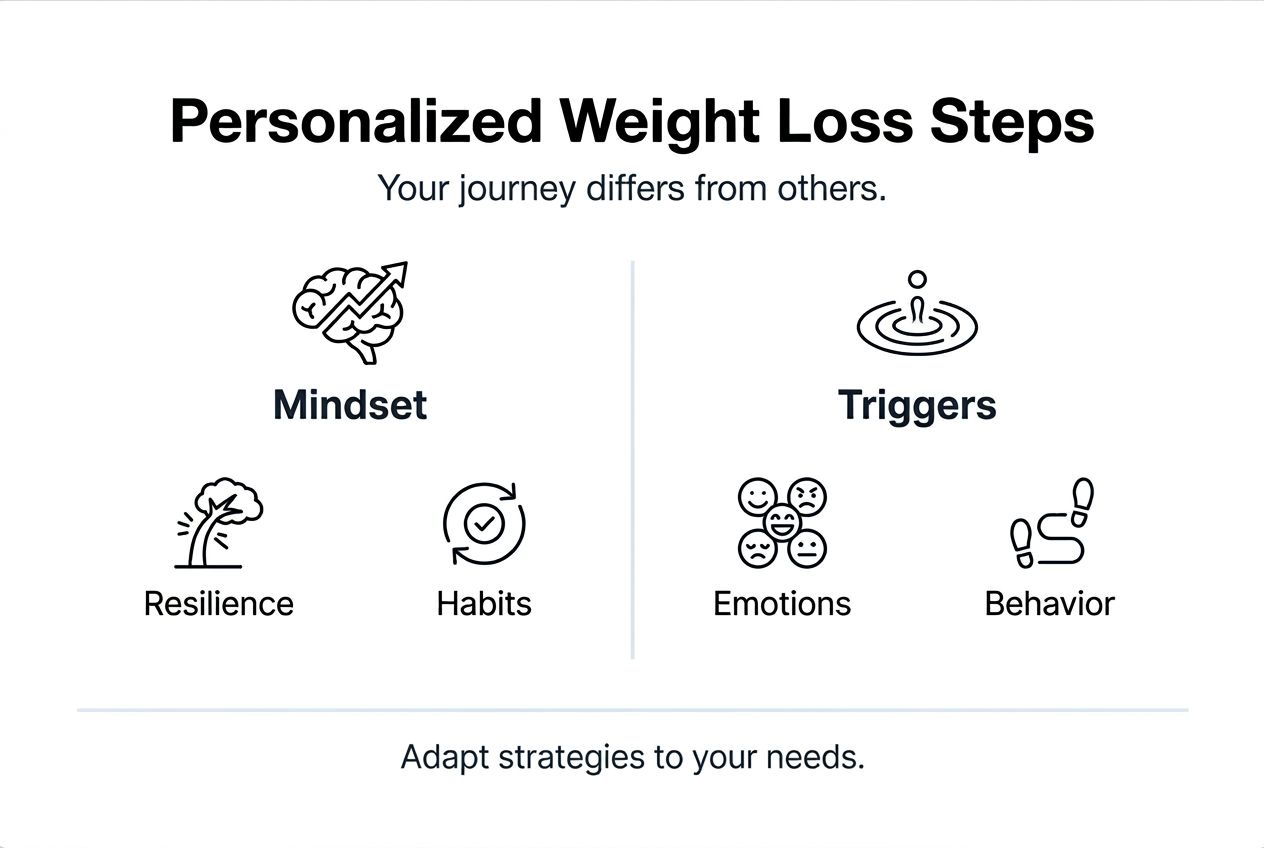
Personalized weight loss adapts to your individual emotional, behavioral, and biological profile rather than following a one-size-fits-all approach. Personalized weight loss approaches that consider individual behaviors, emotions, and biological makeup result in higher long-term success rates compared to standardized diets. Traditional generic programs often fail because they ignore the complex personal factors that drive your eating behaviors and weight management challenges.
This approach leads to more effective and lasting weight loss outcomes because it addresses root causes rather than symptoms. When you understand your specific triggers and patterns, you can build strategies that actually work for your life.
Key components of personalized weight loss include:
- Identifying and addressing your emotional eating patterns and triggers
- Implementing mindset coaching to overcome psychological barriers
- Building habit formation strategies tailored to your lifestyle and preferences
- Adapting nutrition approaches based on your unique responses and challenges
- Creating accountability systems that match your personality and motivation style
The step by step weight loss guide approach recognizes that your journey differs from everyone else’s. You need strategies designed for your specific obstacles, not generic advice that worked for someone with completely different challenges.
The role of emotional eating in weight management
Emotional eating disrupts weight loss efforts by significantly increasing calorie intake during stress periods. Emotional eating can increase intake by a lot during stressful situations, sabotaging even the most careful nutritional planning. It decreases the likelihood of long-term weight loss success because it creates inconsistent eating patterns that undermine progress.

Cognitive behavioral therapy and other psychological interventions can greatly reduce binge episodes. Addressing emotional eating through CBT reduces episodes and improves weight loss maintenance. These techniques help you recognize and respond to emotional triggers differently.
Recognizing emotional triggers is the first step to sustainable change. Common triggers include:
- Work stress and deadlines creating emotion-driven eating
- Social situations triggering FOMO eating patterns
- Loneliness or boredom leading to comfort food seeking
- Relationship conflicts prompting emotional soothing through food
- Fatigue reducing willpower and increasing impulsive choices
Pro Tip: Keep a trigger journal for two weeks. Note what you were feeling, thinking, and doing right before each eating episode. Patterns will emerge that reveal your specific emotional eating drivers, giving you concrete targets for intervention.
The key to managing emotional eating lies in developing alternative coping strategies before triggers hit. When you have practiced responses ready, you can interrupt automatic eating patterns and choose different behaviors that actually address the underlying emotional need.
Mindset and habit formation as pillars of personalization
Mindset coaching builds psychological resilience critical for habit retention over time. Mindset coaching improves habit retention and enhances adherence to personalized weight loss plans. This improvement comes from addressing the mental barriers that typically derail progress when challenges arise.
Cognitive restructuring helps overcome limiting beliefs and emotional barriers that keep you stuck. When you identify thoughts like “I always fail at diets” or “I have no willpower,” you can challenge and replace them with other constructive perspectives. The role of self-talk in shaping your weight loss outcomes cannot be overstated.
Behavioral coaching tailored to individuals produces better adherence compared to generic advice. You need strategies that fit your schedule, preferences, and personality, not cookie-cutter recommendations that ignore your real-world constraints.
Developing new habits follows a stepwise process requiring practice and self-compassion:
- Start with one small habit change rather than overhauling everything at once.
- Link the new habit to an existing routine to leverage established neural pathways.
- Track consistency rather than perfection, celebrating progress over time.
- Adjust the habit when obstacles arise instead of abandoning it completely.
- Build in recovery strategies for when you miss days or face setbacks.
- Gradually layer additional habits once the first becomes automatic.
Pro Tip: Use the two-day rule for habit consistency. Never miss two days in a row. If you skip Monday, make Tuesday non-negotiable. This prevents the slide from one missed day into a complete habit breakdown.
The approach taught through mindset coaching insights emphasizes that behavior change is a skill you develop, not a test of willpower. When you learn to manage cravings through mindset, you gain tools that work across situations rather than relying on temporary motivation.
Common misconceptions about personalized weight loss
Personalized weight loss is not just about expensive genetic testing despite popular marketing claims. While genetic information can provide some insights, it is not necessary to begin an effective personalized approach. Behavioral and emotional tailoring alone improves success by up to 30%, independent of genetic screening.
Focusing solely on calorie counting ignores emotional and behavioral factors critical for success. Calorie counting alone is insufficient for emotional eaters and often fails to produce lasting weight loss. Numbers on a tracking app do not address why you eat when stressed or how to build sustainable habits.
Behavioral and emotional personalization often drives greater improvements than genetic testing alone. Your daily triggers, thought patterns, and coping mechanisms have more immediate impact on eating behaviors than genetic predispositions. Scientific evidence supports personalization grounded in psychology and habit coaching rather than expensive laboratory tests.
Common myths that create confusion include:
- Believing you need DNA analysis before starting a personalized plan
- Assuming all personalization requires tracking every macro and calorie
- Thinking personalized means complicated meal prep and exotic foods
- Expecting instant results from personalized approaches
- Believing willpower is more important than strategy and systems
The most effective weight loss myths debunking reveals that sustainable success comes from understanding your psychological and behavioral patterns, not from finding the perfect macronutrient ratio or superfood. You can achieve significant results by focusing on the mental and emotional aspects of eating.
Practical frameworks for applying personalized weight loss
Personalized weight loss frameworks address emotional, behavioral, and physiological domains together rather than treating them separately. Frameworks integrating emotional triggers and cognitive restructuring improve adherence and outcomes by 25 to 40%. These integrated approaches recognize that your thoughts, feelings, and physical responses all interact to determine eating behaviors.
A stepwise approach creates sustainable change:
- Assess your emotional triggers by tracking eating episodes and associated feelings for two weeks.
- Employ mindset coaching techniques to challenge limiting beliefs and build psychological resilience.
- Implement tailored habits that fit your lifestyle, starting with one small change at a time.
- Develop personalized nutrition strategies based on your preferences and responses.
- Create accountability systems matching your personality and motivation style.
- Adjust and refine your approach based on real-world feedback and results.
Situational coaching improves durability of behavioral changes by 15 to 20% compared to generic programs. This means preparing specific strategies for your high-risk situations like social events, stressful work periods, or travel.
| Framework Element | Generic Approach | Personalized Approach |
| Emotional eating | Ignore or use willpower | Identify specific triggers and create coping alternatives |
| Habit formation | Follow standard meal plan | Build habits around your schedule and preferences |
| Mindset work | Motivational quotes | Cognitive restructuring targeting your specific limiting beliefs |
| Nutrition strategy | Fixed macros and calories | Adapted to your responses, preferences, and lifestyle |
| Accountability | Weekly weigh-ins | Systems matching your personality and motivation drivers |
Including gut health awareness can help manage cravings by improving your understanding of physical versus emotional hunger signals. When you recognize how different foods affect your satiety and energy, you can make choices that support rather than undermine your goals.
Pro Tip: Create a situation playbook for your three most challenging scenarios. Write out specific strategies for each, including what you will think, say, and do when facing that situation. Rehearse these mentally so they become automatic responses.
The weight loss framework guide provides detailed steps for building your personalized system. If you need support implementing these strategies, mindset coaching contact connects you with expert guidance tailored to your specific challenges.
Bridging understanding to sustainable weight loss success
Sustainable weight loss requires addressing emotional and cognitive factors beyond calorie counting. The numbers on your plate matter far less than the thoughts in your head and the triggers in your environment. When you ignore psychological factors, even perfect nutritional adherence eventually breaks down under stress.
One-size-fits-all diets rarely produce lasting results for emotional eaters because they do not address the underlying drivers of eating behavior. You need strategies designed for your specific psychological patterns, not generic meal plans that worked for someone with completely different challenges.
Personalized coaching focusing on mindset and habits offers a viable path to stable weight management. By building psychological resilience, identifying your triggers, and creating tailored systems, you develop skills that last beyond any single diet program.
Essential insights for sustainable success include:
- Your emotional and behavioral patterns drive eating more than willpower or knowledge
- Small, consistent habit changes outperform dramatic overhauls
- Cognitive restructuring creates lasting mindset shifts supporting new behaviors
- Situational strategies prepared in advance prevent automatic responses
- Self-compassion during setbacks maintains momentum better than harsh criticism
Being aware of your triggers and engaging in behavioral change are prerequisites for success. You cannot change patterns you have not identified, and you cannot maintain changes without addressing the thoughts and emotions driving old behaviors.
The sustainable weight loss strategies you develop through personalized approaches become part of your lifestyle rather than temporary fixes. This lasting change guide shows you how to build systems that adapt to your life rather than requiring your life to adapt to a rigid diet.
Discover personalized weight loss coaching designed for lasting change
If you are ready to move beyond generic diets and address the real barriers keeping you stuck, personalized coaching offers a different path. Our approach integrates mindset and habit work for sustainable results that last beyond motivation spikes.
The step by step weight loss guide walks you through identifying your triggers, building psychological resilience, and creating tailored habits that fit your life. You will learn practical frameworks for overcoming emotional eating and developing the mental skills that support long-term success.
Join others who have successfully maintained weight loss through behavioral change rather than willpower. Explore lasting weight loss strategies and discover how mindset-focused coaching creates results that traditional dieting never delivered. Visit Mindset Over Menu to learn more about personalized coaching options.
Frequently asked questions
What is personalized weight loss?
Personalized weight loss tailors strategies to your individual emotional, behavioral, and biological profile rather than following generic diet plans. It addresses your specific triggers, psychological barriers, and lifestyle constraints to create sustainable change. This approach recognizes that your challenges differ from others, requiring customized solutions that work for your unique situation. The weight loss guide explains how to build personalized strategies step by step.
Do I need genetic testing to start personalized weight loss?
Genetic testing is not necessary to begin personalized weight loss and often provides minimal practical benefit. Behavioral and emotional tailoring alone improves success by up to 30%, independent of genetic screening. Focusing on your psychological patterns, emotional triggers, and habit formation typically drives greater results than expensive DNA analysis. You can achieve significant progress by addressing mindset and behavior without any genetic testing.
How does mindset coaching help with weight loss?
Mindset coaching enhances habit retention by addressing psychological barriers that typically derail progress under stress. It builds confidence to handle triggers and maintain healthy behaviors when motivation fades. By challenging limiting beliefs and developing cognitive resilience, you create mental frameworks that support lasting change. The mindset coaching benefits include improved adherence, better stress management, and sustainable behavioral patterns.
What practical steps can I take to start personalized weight loss?
Begin by identifying your emotional and behavioral eating patterns through two weeks of trigger tracking. Engage in mindset coaching to build resilience against your specific psychological barriers. Create tailored habits and nutrition plans based on insights about your triggers, preferences, and lifestyle constraints. The guide for starting personalized weight loss provides detailed steps for building your customized approach.