
Over half of adults with obesity struggle with emotional eating, yet most weight loss programs focus solely on meal plans and calorie counting. This mismatch explains why traditional diets fail so often. The missing piece isn’t another restrictive eating plan. It’s addressing the psychological drivers that fuel emotional eating in the first place. Mindset shifts combined with habit coaching target these root causes, creating sustainable change that lasts beyond the initial motivation phase. This article explores how cognitive and behavioral strategies help you break free from emotional eating cycles and achieve weight loss that sticks.
Table of Contents
- Understanding Emotional Eating And Its Impact On Weight
- How Mindset Shifts And Behavioral Therapies Help Break Emotional Eating Cycles
- The Power Of Habit Coaching Combined With Mindset Work For Lasting Weight Loss
- Nuances, Challenges, And When To Seek Professional Support
- Discover Guided Mindset And Habit Coaching For Lasting Weight Loss
- Frequently Asked Questions About Mindset Shifts And Emotional Eating
Key takeaways
| Point | Details |
|---|---|
| Emotional eating drives obesity | Roughly 50-57% of adults with obesity report using food to cope with emotions rather than physical hunger. |
| Mindset shifts address root causes | Cognitive behavioral therapy and mindfulness target the psychological patterns behind emotional eating, not just symptoms. |
| Habit coaching amplifies results | Structured habit formation combined with mindset work reduces relapse rates and improves long-term adherence. |
| Professional support matters | Severe trauma or complex mental health conditions may require specialized therapy before mindset shifts become effective. |
| Sustainable change takes time | Mindset work requires consistent effort and realistic expectations, not quick fixes or willpower alone. |
Understanding emotional eating and its impact on weight
Emotional eating happens when you use food to manage feelings rather than satisfy genuine physical hunger. Stress, boredom, sadness, or even happiness can trigger eating episodes that have nothing to do with your body’s nutritional needs. This pattern creates a vicious cycle where temporary relief from uncomfortable emotions reinforces the behavior, making it harder to break over time.
The numbers tell a sobering story. Between 50 and 57% of adults with obesity report emotional eating as a significant factor in their weight struggles. This isn’t a character flaw or lack of discipline. Emotional eating stems from using food as a coping mechanism for psychological distress, creating patterns that traditional dieting simply can’t address. Research shows a direct correlation between emotional eating frequency and higher BMI, suggesting that these episodes contribute substantially to weight gain over time.
Common triggers include:
- Work stress and deadline pressure
- Relationship conflicts or loneliness
- Financial worries and uncertainty
- Boredom or lack of stimulation
- Celebration and social gatherings
The real problem isn’t the occasional stress snack. It’s when eating becomes your primary strategy for managing emotions. Food provides immediate comfort but creates long-term consequences, both physically and psychologically. You might feel guilty after an emotional eating episode, which then triggers more emotional eating to cope with that guilt. This self-perpetuating cycle makes sustainable weight loss nearly impossible without addressing the underlying mindset patterns driving the behavior.
“Emotional eating is most often defined as eating triggered by negative emotions as opposed to genuine physiological hunger.”
Understanding these dynamics is the first step toward breaking free. Once you recognize that your weight struggles stem from psychological patterns rather than simple willpower failures, you can start addressing the actual problem instead of fighting symptoms.
How mindset shifts and behavioral therapies help break emotional eating cycles
Cognitive Behavioral Therapy offers powerful tools for dismantling the thought patterns that fuel emotional eating. CBT restructures harmful thinking by identifying and challenging cognitive distortions like all-or-nothing thinking, catastrophizing, and emotional reasoning. When you believe one cookie ruins your entire day, you’re more likely to abandon restraint completely. CBT helps you recognize these distortions and replace them with balanced, realistic thoughts.

Mindfulness-based interventions work differently but complement CBT beautifully. Rather than changing your thoughts directly, mindfulness teaches you to observe cravings and emotions without automatically reacting to them. Mindfulness significantly reduces food craving intensity by creating space between the urge and the action. You learn to sit with discomfort instead of immediately reaching for food to make it disappear.
Key behavioral strategies include:
- Identifying and labeling emotions before they trigger eating
- Challenging black-and-white thinking about food choices
- Practicing urge surfing when cravings arise
- Building a toolkit of non-food coping mechanisms
- Developing self-compassion instead of harsh self-criticism
Mindset shift concepts form the foundation for lasting change. A growth mindset helps you view setbacks as learning opportunities rather than proof of failure. Self-compassion reduces the shame spiral that often follows emotional eating episodes. When you stop beating yourself up for being human, you create psychological safety that makes behavior change possible.
Pro Tip: Practice three minutes of mindful breathing when you feel the urge to eat emotionally. Notice the physical sensations of the craving without judging them. This simple pause often reveals whether you’re experiencing genuine hunger or emotional distress, giving you the choice to respond differently.
These approaches work because they target the root cause rather than just managing symptoms. Willpower eventually runs out, but new neural pathways created through consistent practice become automatic over time. You’re not fighting your brain anymore. You’re retraining it.
The power of habit coaching combined with mindset work for lasting weight loss
Habit formation follows predictable patterns that you can leverage for sustainable change. Every habit operates through a cue-response-reward loop. The cue triggers the behavior, the response is the action itself, and the reward reinforces the pattern. Understanding this framework lets you intentionally design new habits that replace emotional eating with healthier coping strategies.
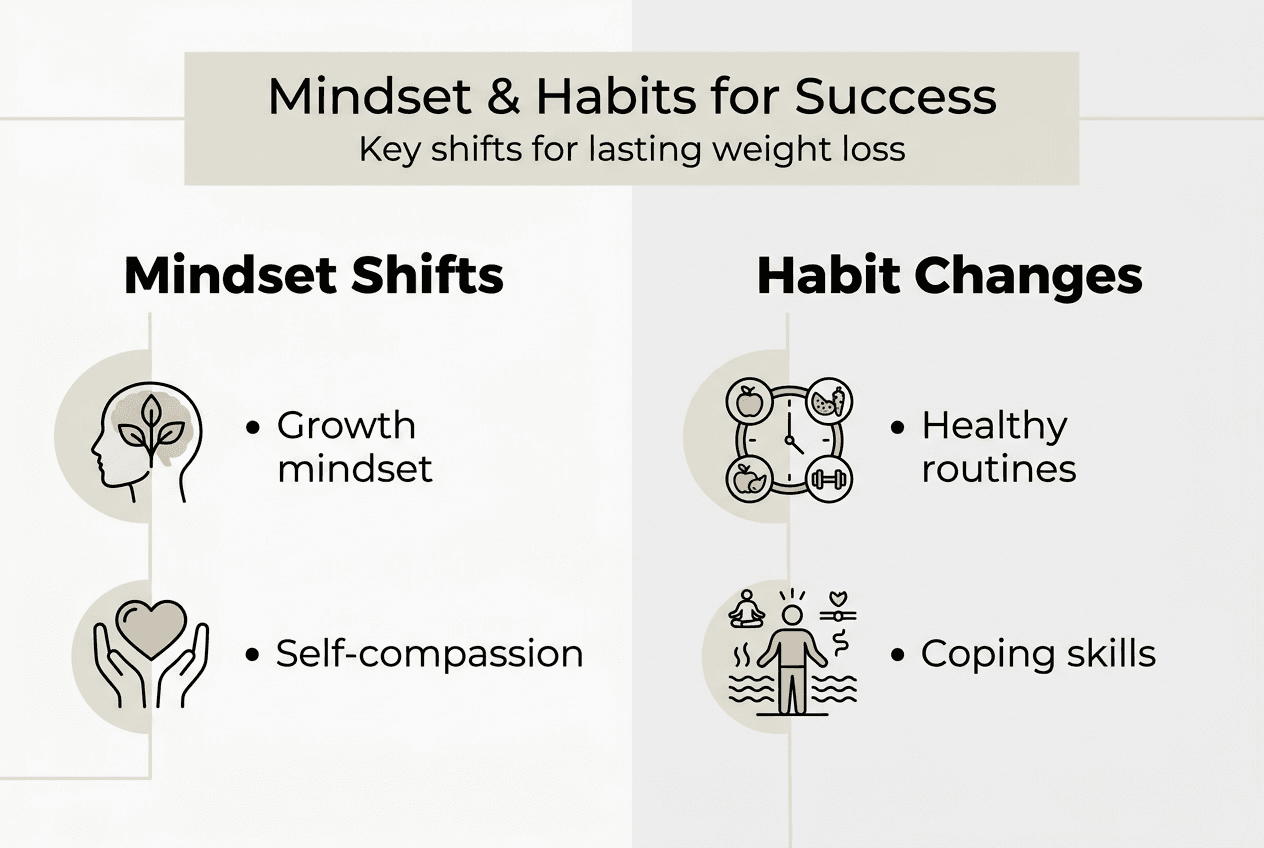
Habit coaching with mindset work provides structured support that traditional dieting lacks. Instead of relying on motivation alone, you build systems that make healthy choices easier. The coach helps you identify specific triggers, design replacement behaviors, and track progress systematically. This structured approach dramatically improves adherence rates compared to willpower-based methods.
Steps to integrate habit coaching with mindset shifts:
- Map your current emotional eating triggers and patterns
- Identify the emotional needs these eating episodes fulfill
- Design alternative responses that meet the same needs without food
- Start with one small habit change and master it completely
- Build on success gradually rather than overhauling everything at once
- Track both behaviors and emotions to identify patterns
- Adjust strategies based on what works for your unique situation
The difference between old patterns and new strategies becomes clear when you compare them side by side:
| Old Emotional Eating Pattern | New Coping Strategy |
|---|---|
| Stress at work triggers snacking | Five-minute walk or breathing exercise |
| Boredom leads to kitchen browsing | Engaging hobby or calling a friend |
| Sadness prompts comfort food | Journaling or physical movement |
| Celebration equals overeating | Mindful enjoyment of smaller portions |
| Loneliness drives late-night eating | Connection through non-food activities |
Pro Tip: Celebrate small wins immediately to reinforce new habits. When you successfully use a healthy coping strategy instead of emotional eating, acknowledge it explicitly. This positive reinforcement strengthens the new neural pathway, making the behavior more automatic over time.
The combination of mindset work and habit coaching addresses both the psychological roots and the practical implementation challenges. You gain insight into why you eat emotionally while simultaneously building concrete skills to respond differently. This dual approach creates lasting change that survives stress, setbacks, and real-life complications. Traditional diets fail because they ignore the psychological component. Structured habit coaching succeeds because it works with your brain’s natural learning processes rather than against them.
Nuances, challenges, and when to seek professional support
Mindset shifts work powerfully for many people, but they’re not a universal solution for every situation. Severe trauma, complex PTSD, or underlying mental health conditions like depression and anxiety can complicate emotional eating in ways that require specialized therapeutic interventions. Trauma survivors may need targeted therapy before mindset work becomes effective, because the nervous system dysregulation from trauma creates physiological responses that simple cognitive strategies can’t address.
Signs you might benefit from professional therapy include:
- Emotional eating episodes that feel completely out of your control
- History of trauma that surfaces during attempts to change eating patterns
- Diagnosed mental health conditions affecting your relationship with food
- Binge eating disorder or other clinical eating disorders
- Persistent feelings of shame, worthlessness, or self-hatred around food
- Previous suicide attempts or active suicidal ideation
Academic debates continue about the relative importance of individual mindset versus environmental and systemic factors in obesity. Some researchers argue that focusing solely on personal psychology ignores food deserts, socioeconomic barriers, and cultural influences that shape eating behaviors. This perspective has merit. Mindset shifts work best when combined with practical support for environmental changes, not as a replacement for addressing real-world obstacles.
Realistic expectations matter enormously. Mindset work isn’t a quick fix that produces overnight transformation. You’re rewiring neural pathways that developed over years or decades. This process requires consistent effort, patience with setbacks, and willingness to keep learning from mistakes. The timeline varies dramatically between individuals based on trauma history, current stress levels, available support, and dozens of other factors.
Some people experience rapid improvements within weeks. Others need months or years of consistent practice before new patterns feel natural. Both timelines are normal and valid. Comparing your progress to someone else’s sets you up for unnecessary frustration and self-criticism.
When emotional eating connects to severe trauma, approaches like EMDR or trauma-informed CBT may need to come first. These therapies help process traumatic memories and regulate the nervous system before cognitive strategies for eating patterns become accessible. There’s no shame in needing this foundation. It’s simply meeting yourself where you are and providing the support your specific situation requires.
If you’re unsure whether you need professional help, consulting with an experienced coach can provide clarity. A good coach recognizes the limits of their scope and refers clients to appropriate mental health professionals when needed. This collaborative approach ensures you get the right support at the right time.
Discover guided mindset and habit coaching for lasting weight loss
If emotional eating has kept you stuck in cycles of temporary weight loss followed by frustrating regain, you’re not alone, and you don’t have to figure this out by yourself. The strategies outlined in this article work, but implementing them consistently requires support, accountability, and expert guidance tailored to your unique situation.

Mindset Over Menu specializes in helping adults break free from emotional eating through personalized coaching that combines mindset shifts with practical habit formation. Our comprehensive 2026 weight loss guide walks you through proven strategies for sustainable change, while our mindset shift resources provide actionable techniques you can start using immediately. Led by Constantin Liculescu, an experienced weight loss coach who understands the psychological complexities of emotional eating, our programs focus on lasting results rather than quick fixes. Explore our coaching approach to see how personalized support can accelerate your journey toward food freedom and sustainable weight loss.
Frequently asked questions about mindset shifts and emotional eating
How can I tell the difference between emotional and physical hunger?
Physical hunger builds gradually, occurs several hours after eating, and accepts any food that provides nutrition. Emotional hunger strikes suddenly, craves specific comfort foods, and persists even after you’re physically full. Physical hunger also disappears once you’ve eaten enough, while emotional eating often leads to guilt and shame afterward.
What mindset shift should I start with to overcome emotional eating?
Begin with self-compassion instead of self-criticism when you eat emotionally. Harsh judgment creates shame spirals that fuel more emotional eating, while compassionate awareness creates psychological safety for change. Notice your patterns with curiosity rather than condemnation, treating yourself like you’d treat a good friend struggling with the same issue.
Are mindset shifts alone enough to stop binge eating episodes?
For mild to moderate emotional eating, mindset shifts combined with habit coaching often produce significant improvements. However, clinical binge eating disorder or emotional eating rooted in severe trauma typically requires professional therapy alongside mindset work. The severity of your symptoms and underlying causes determine whether additional support is necessary.
When should I consider professional therapy for emotional eating?
Seek professional help if emotional eating feels completely uncontrollable, connects to trauma or abuse history, occurs alongside depression or anxiety, or involves purging behaviors. Also consider therapy if you’ve tried mindset strategies consistently for several months without improvement. A personalized assessment can help determine the right level of support.
How can habit coaching support my weight loss journey alongside mindset work?
Habit coaching provides structured accountability and practical implementation strategies that translate mindset insights into consistent action. While mindset work helps you understand why you eat emotionally, habit coaching teaches you how to respond differently in real-world situations. This combination addresses both the psychological roots and the behavioral patterns, creating sustainable change that lasts beyond initial motivation. The coaching process helps you manage food desires while building new automatic responses to emotional triggers.
Recommended
- Master mindset shift tips for lasting weight loss
- Mindset Over Menu
- Lose the Weight. Keep It Off. For Real. – Mindset Over Menu
- Top 4 LoseWeightSuccess Alternatives 2026
- Weight Management: Impact on Fitness Goals – MyGymSupplements
- Motivation zum Abnehmen: Aktiv werden für ein besseres Leben