
Most people think weight loss is just about eating less and moving more, but that oversimplified approach ignores why weight gain happens in the first place. Holistic weight loss targets the underlying factors driving your body to hold onto excess weight, including hormonal imbalances, gut health issues, nervous system dysregulation, and emotional eating patterns. Instead of another restrictive diet that leaves you frustrated and stuck in cycles of losing and regaining weight, this approach addresses root causes to create sustainable change. This guide explains what holistic weight loss really means and how you can apply it for lasting results in 2026.
Table of Contents
- Understanding Holistic Weight Loss: Addressing The Root Causes
- The Role Of Mindset And Emotional Eating In Holistic Weight Loss
- Nutrition And Lifestyle Strategies Supporting Holistic Weight Loss
- Putting Holistic Weight Loss Into Practice: Personalized And Sustainable Habits
- Explore Expert Coaching For Your Holistic Weight Loss Journey
- What Is Holistic Weight Loss?
Key takeaways
| Point | Details |
|---|---|
| Root cause focus | Holistic weight loss addresses insulin resistance, liver function, gut health, and nervous system regulation instead of just cutting calories. |
| Mindset matters | Managing emotional eating and building self-awareness through coaching creates sustainable habits that last beyond temporary motivation. |
| Evidence-based nutrition | Plant-based diets and lifestyle medicine integrating sleep, stress management, and exercise support effective fat loss. |
| Personalized approach | Tailoring strategies to your unique triggers, hormonal profile, and lifestyle maximizes adherence and long-term success. |
Understanding holistic weight loss: addressing the root causes
Holistic weight loss emphasizes addressing root causes like insulin resistance, liver function, gut health, and nervous system regulation rather than focusing solely on calorie restriction. When your body struggles with insulin sensitivity, every meal triggers excessive fat storage regardless of portion size. Your liver processes hormones and toxins, so when it becomes sluggish from poor diet or chronic stress, weight loss stalls even with perfect calorie counting.
Your gut microbiome directly influences inflammation levels and metabolism. An imbalanced gut populated with the wrong bacterial strains sends hunger signals even when you’ve eaten enough, driving cravings and overeating. Chronic low-grade inflammation from gut dysbiosis makes fat cells resistant to releasing stored energy, trapping you in a cycle where your body refuses to let go of weight.
Stress and nervous system dysregulation block weight loss by keeping cortisol elevated. When your body perceives constant threat, whether from work pressure, relationship stress, or restrictive dieting itself, it prioritizes survival over fat burning. Your metabolism slows, hunger hormones surge, and willpower becomes irrelevant because biology overrides conscious choice.
Pro Tip: Start each morning with 16 ounces of water containing fresh lemon juice to support liver detoxification and kickstart metabolism before breakfast.
Mindset forms the foundation of holistic weight loss because your body won’t release weight if it feels unsafe. Chronic dieting creates a perceived famine state that triggers protective mechanisms to conserve energy. Breaking this pattern requires addressing the psychological and emotional factors keeping your nervous system in fight-or-flight mode. Check out this step by step weight loss guide for practical frameworks to implement these principles.
- Insulin resistance develops from years of high-sugar, processed food intake and sedentary behavior
- Liver congestion from environmental toxins, alcohol, and inflammatory foods slows hormone metabolism
- Gut dysbiosis creates cravings for the exact foods that perpetuate imbalance
- Elevated cortisol from chronic stress signals your body to store abdominal fat
The role of mindset and emotional eating in holistic weight loss
Emotional eating is driven by negative emotions like stress, sadness, or boredom rather than physical hunger. About half of adults with obesity report emotional eating patterns, and behavioral treatments like cognitive behavioral therapy and mindfulness-based approaches show promise for reduction. When you eat to soothe uncomfortable feelings, food becomes a coping mechanism that reinforces the habit loop every time you experience emotional discomfort.
Mindset coaching builds self-awareness around these patterns by helping you identify triggers before they lead to automatic eating. You learn to distinguish true hunger from emotional impulses and develop healthier coping strategies that don’t involve food. This process requires patience because you’re rewiring neural pathways formed over years or decades of habitual responses.

Cognitive behavioral techniques challenge the distorted thoughts driving emotional eating. If you believe you’ve ruined your diet after one cookie, that all-or-nothing thinking triggers a binge. Reframing these thoughts creates space between impulse and action, allowing conscious choice instead of automatic reaction. Mindfulness practices strengthen this awareness by teaching you to observe cravings without immediately acting on them.
Pro Tip: When a craving hits, pause for 10 minutes and ask yourself what emotion you’re actually feeling. Journal about it or call a friend instead of heading to the kitchen.
Building sustainable weight loss requires addressing the emotional void that food has been filling. Many people use eating to avoid difficult feelings, create pleasure in an otherwise stressful life, or rebel against restrictive rules they’ve imposed on themselves. Understanding your unique emotional eating patterns is the first step toward developing genuine solutions. Explore master mindset shift tips to start transforming your relationship with food.
- Emotional eating serves as a temporary escape from uncomfortable feelings
- Restrictive dieting often increases emotional eating by creating deprivation and rebellion
- Self-compassion reduces shame that fuels binge-restrict cycles
- Mindfulness creates awareness of hunger cues versus emotional triggers
Learn more about the role of self talk and discover diet trap reset strategies to break free from patterns that sabotage progress.
Nutrition and lifestyle strategies supporting holistic weight loss
Evidence shows that plant-based diets reduce weight, body fat, and waist circumference significantly compared to omnivorous eating patterns. Vegan and EAT-Lancet diets emphasize whole foods, fiber, and nutrient density while naturally reducing calorie intake without requiring strict portion control. The high fiber content supports gut health and creates lasting satiety that prevents overeating.
Lifestyle medicine integrating diet, exercise, sleep, and stress management forms the foundation for obesity treatment backed by clinical guidelines. This comprehensive approach recognizes that no single factor determines weight, so addressing multiple lifestyle domains simultaneously creates synergistic effects. Sleep deprivation disrupts hunger hormones, stress elevates cortisol, and sedentary behavior slows metabolism, so optimizing all these areas accelerates results.
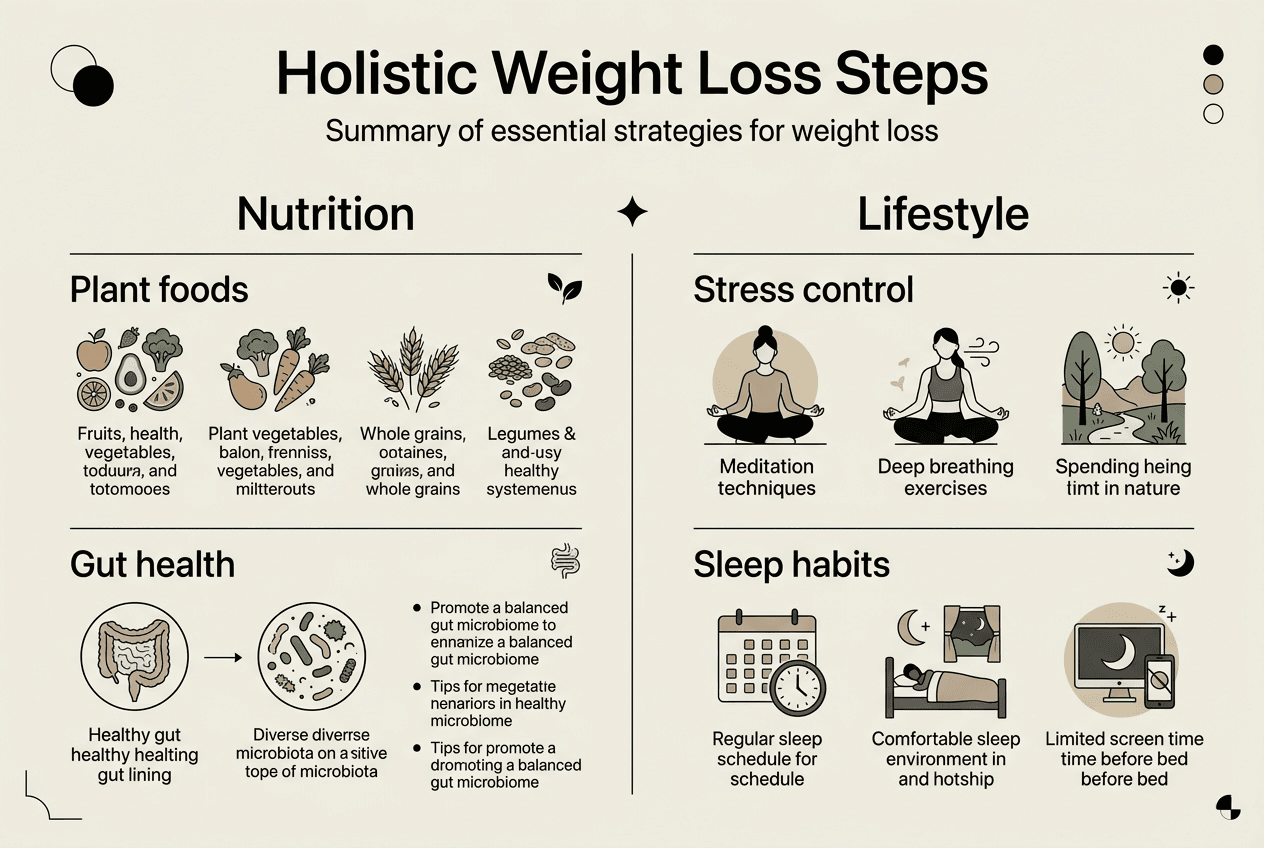
Exercise recommendations for sustainable weight loss include 200 to 300 minutes of moderate intensity activity weekly. This might seem daunting, but breaking it into daily 30-minute sessions makes it manageable. Resistance training builds muscle mass that increases resting metabolic rate, while cardiovascular exercise improves insulin sensitivity and cardiovascular health. Movement also regulates mood and reduces stress, supporting the mindset component of holistic weight loss.
| Diet Type | Average Weight Loss | Key Benefits | Considerations |
|---|---|---|---|
| Vegan | 4.5 kg over 12 weeks | High fiber, nutrient density, gut health | Requires B12 supplementation |
| Mediterranean | 3.8 kg over 12 weeks | Heart health, anti-inflammatory | Moderate fat intake |
| Low-carb | 5.2 kg over 12 weeks | Rapid initial results, appetite control | May affect energy levels |
| EAT-Lancet | 4.1 kg over 12 weeks | Sustainable, environmentally friendly | Requires meal planning |
Building lifestyle changes incrementally ensures lasting habits instead of overwhelming yourself with too many changes at once:
- Start with one meal upgrade, replacing processed breakfast with whole food options like oatmeal with berries and nuts.
- Add 10 minutes of movement daily, gradually increasing duration and intensity as fitness improves.
- Establish a consistent sleep schedule, aiming for 7 to 9 hours nightly to support hormone regulation.
- Practice one stress-reduction technique like deep breathing, meditation, or journaling for 5 minutes daily.
- Gradually shift toward more plant-based meals, adding one meatless day per week until it feels natural.
Discover how to create a personalized weight loss guide tailored to your unique needs and preferences.
Putting holistic weight loss into practice: personalized and sustainable habits
Holistic weight loss is not one-size-fits-all, and personalized strategies maximize adherence by considering hormonal imbalances, food sensitivities, and emotional triggers unique to you. What works for your friend or coworker might not address your specific challenges. Some people struggle with insulin resistance requiring lower carbohydrate intake, while others battle gut issues needing specific probiotics and anti-inflammatory foods.
Building one sustainable habit at a time creates lasting change because you’re not relying on willpower to maintain 10 new behaviors simultaneously. Focus on mastering a single habit for 3 to 4 weeks before adding another. This approach feels less restrictive and builds confidence as each small win reinforces your capability to change. Stacking habits works well, like doing 5 minutes of stretching right after brushing your teeth each morning.
Recognizing and overcoming common pitfalls like rebound weight gain requires understanding why they happen. Restrictive diets slow metabolism and increase hunger hormones, so when you return to normal eating, rapid regain occurs. Holistic weight loss prevents this by maintaining metabolic health throughout the process and building habits you can sustain indefinitely rather than temporary behaviors you’ll abandon.
| Root Cause | Common Symptoms | Targeted Intervention |
|---|---|---|
| Insulin resistance | Sugar cravings, energy crashes, abdominal fat | Reduce refined carbs, increase protein and fiber, add strength training |
| Gut dysbiosis | Bloating, irregular digestion, persistent cravings | Probiotic foods, prebiotic fiber, eliminate inflammatory triggers |
| Chronic stress | Emotional eating, poor sleep, elevated cortisol | Stress management practices, adequate sleep, nervous system regulation |
| Hormonal imbalance | Irregular cycles, low energy, stubborn weight | Support liver detox, balance blood sugar, consider functional testing |
Pro Tip: Track progress through measurements beyond the scale like energy levels, sleep quality, mood stability, and how your clothes fit to see the full picture of health improvements.
Implement the strategies outlined in this step by step weight loss guide and explore lasting weight loss strategies to maintain results long term.
- Identify your specific triggers through honest self-assessment and journaling
- Work with professionals who can test for underlying issues like thyroid dysfunction or nutrient deficiencies
- Celebrate non-scale victories to stay motivated during plateaus
- Adjust your approach based on feedback from your body rather than rigidly following a plan that isn’t working
Explore expert coaching for your holistic weight loss journey
Transforming your relationship with food and your body requires more than information. It demands personalized support that addresses your unique challenges, emotional patterns, and lifestyle realities. Mindset Over Menu offers specialized coaching focused on the psychological and behavioral foundations that make weight loss sustainable. You’ll work with experts who understand that lasting change happens when you shift your mindset first, then your habits naturally follow.
Our step by step weight loss guide provides a structured framework for implementing holistic principles in your daily life. Discover mindset shift tips that address the root psychological barriers keeping you stuck. Visit Mindset Over Menu to explore coaching options designed for individuals ready to break free from diet culture and build genuine, lasting health.
What is holistic weight loss?
What does holistic weight loss mean?
Holistic weight loss addresses the complete picture of why your body holds onto excess weight, including hormonal balance, gut health, nervous system regulation, emotional eating patterns, and lifestyle factors like sleep and stress. It moves beyond calorie counting to fix underlying dysfunction that prevents sustainable fat loss.
Why does emotional eating matter for weight loss success?
Emotional eating creates a habit loop where food becomes your primary coping mechanism for stress, boredom, or sadness, leading to consistent overeating regardless of hunger. Breaking this pattern requires developing emotional awareness and healthier coping strategies, which is why mindset coaching forms a critical component of lasting weight loss.
How does mindset coaching support lasting weight loss habits?
Mindset coaching builds self-awareness around automatic thoughts and behaviors that sabotage progress, helping you identify triggers before they lead to overeating. You learn to challenge distorted thinking patterns, develop self-compassion, and create new neural pathways that support healthier choices without relying on willpower alone.
Do plant-based diets really work for holistic weight loss?
Research demonstrates that vegan and plant-focused eating patterns produce significant reductions in body weight, body fat percentage, and waist circumference compared to omnivorous diets. The high fiber content supports gut health and satiety while naturally reducing calorie intake, making plant-based approaches effective for sustainable fat loss when implemented thoughtfully.
Is calorie counting necessary for holistic weight loss?
Calorie counting isn’t required when you address root causes like insulin resistance and emotional eating while focusing on whole, nutrient-dense foods that naturally regulate appetite. Your body’s hunger and satiety signals work properly when hormones are balanced and gut health is optimized, eliminating the need for meticulous tracking that often creates an unhealthy relationship with food.
Recommended
- Master mindset shift tips for lasting weight loss
- Step by step weight loss guide for lasting change 2026
- What is personalized weight loss? A 2026 mindset guide – Mindset Over Menu
- Master the role of self-talk in weight loss success