
Maintaining weight loss feels harder than losing it in the first place. You’ve worked hard to drop pounds, but emotional eating, metabolic slowdowns, and old habits threaten your progress. This comprehensive guide delivers evidence-based strategies rooted in mindset coaching and behavioral science to help you sustain your results for life. You’ll discover how to manage emotional triggers, align your daily routine with your biology, and build habits that support permanent change without relying on restrictive diets.
Table of Contents
- Understanding Why Maintaining Weight Loss Is Challenging
- Preparing For Long-Term Success: Mindset And Lifestyle Foundations
- Implementing Lifestyle Strategies: Diet, Exercise, And Circadian Health
- Monitoring Progress And Troubleshooting Common Challenges
- Explore Personalized Mindset Coaching For Lasting Change
- How Long Does It Take To Maintain Weight Loss Successfully?
Key takeaways
| Point | Details |
|---|---|
| Multifactorial approach | Combine mindset work, nutrition, exercise, and circadian alignment for lasting weight control. |
| Emotional eating impact | Over half of adults with obesity struggle with emotional eating, requiring behavioral interventions. |
| Evidence-based nutrition | High-protein, high-fiber meals and 200-300 minutes weekly exercise predict long-term success. |
| Circadian rhythm matters | Aligning eating and sleep with natural rhythms improves metabolism and appetite regulation. |
| Mindset is foundational | Cognitive-behavioral therapy and self-compassion reduce emotional eating and prevent relapse. |
Understanding why maintaining weight loss is challenging
Your body fights back when you lose weight. Metabolic and hormonal adaptations following weight loss increase appetite and lower energy expenditure, making regain likely without deliberate countermeasures. Hormones like leptin drop while ghrelin rises, signaling hunger even when you’ve eaten enough. These biological shifts persist for months or years, creating a constant uphill battle.
Behavioral patterns complicate maintenance further. Emotional eating affects 50-57% of adults with obesity, driving consumption in response to stress, sadness, or boredom rather than physical hunger. When negative emotions trigger eating, you override satiety signals and consume calories your body doesn’t need. This cycle sabotages even the most disciplined efforts.
Psychosocial and environmental factors also play roles. Social pressures, food availability, and ingrained habits shape your eating behaviors daily. Understanding these multifaceted challenges prepares you for a personalized weight loss strategy that addresses root causes instead of symptoms.
Pro Tip: Track your emotions alongside meals for one week to identify patterns between feelings and eating episodes.
Key barriers to sustained weight loss include:
- Compensatory metabolic slowdown reducing daily calorie burn
- Elevated hunger hormones persisting long after weight loss
- Emotional eating triggered by stress, loneliness, or negative self-talk
- Environmental cues promoting overconsumption
- Lack of ongoing behavioral support after initial weight loss
Research on obesity management confirms that biological, psychological, and environmental factors interact to influence weight trajectories. Recognizing this complexity helps you approach maintenance with realistic expectations and comprehensive strategies.
“Weight maintenance requires addressing not just what you eat, but why you eat, when you eat, and how your environment shapes those choices.”
Preparing for long-term success: mindset and lifestyle foundations
Before implementing specific diet or exercise changes, cultivate awareness of your emotional eating triggers. Notice when you reach for food despite not being physically hungry. Identify the emotions driving those moments: anxiety before a meeting, loneliness on quiet evenings, frustration after a difficult conversation. This awareness creates space for alternative responses.
Mindset shifts reduce relapse risk significantly. Practicing self-compassion when setbacks occur prevents the shame spiral that often leads to abandoning healthy habits entirely. Managing negative self-talk for weight loss transforms your internal dialogue from critic to coach. Cognitive-behavioral and mindfulness treatments show promise in decreasing emotional eating by teaching you to observe thoughts without automatically acting on them.

Setting realistic, flexible goals supports sustainable change better than rigid rules. Instead of “never eat dessert,” try “enjoy dessert mindfully twice weekly.” Flexibility accommodates real life while maintaining overall healthy patterns. Goals should focus on behaviors you control like meal planning frequency or weekly exercise sessions rather than outcomes like specific scale numbers.
Planning your daily routine around maintenance priorities sets you up for success. Schedule meals at consistent times to regulate hunger hormones. Block time for physical activity just as you would important appointments. Prioritize sleep to support circadian alignment and reduce stress-driven eating.
Pro Tip: Practice a two-minute mindfulness exercise before meals to distinguish physical hunger from emotional urges.
Essential preparation steps include:
- Journaling emotions and eating patterns to reveal triggers
- Developing self-compassion practices for inevitable setbacks
- Reframing mindset shift tips from all-or-nothing to progress-focused thinking
- Creating meal and activity schedules that align with your natural rhythms
- Learning cognitive-behavioral techniques through resources or coaching
Studies on tele-CBT for emotional eating demonstrate that structured behavioral interventions delivered remotely can effectively reduce emotional eating episodes and support weight maintenance. Early adoption of these techniques builds resilience before challenges arise.
Implementing lifestyle strategies: diet, exercise, and circadian health
Nutrition strategies for maintenance differ from weight loss phases. Consume meals containing 25-30 grams of protein and high fiber to increase satiety and optimize hormone regulation. Protein stimulates peptide YY and GLP-1, hormones that signal fullness. Fiber slows digestion, stabilizing blood sugar and extending satisfaction between meals.
Physical activity remains one of the strongest predictors of successful maintenance. Engage in 200-300 minutes weekly of moderate aerobic exercise like brisk walking, cycling, or swimming. This volume supports metabolism and counteracts the compensatory reduction in energy expenditure following weight loss. Consistency matters more than intensity for long-term adherence.
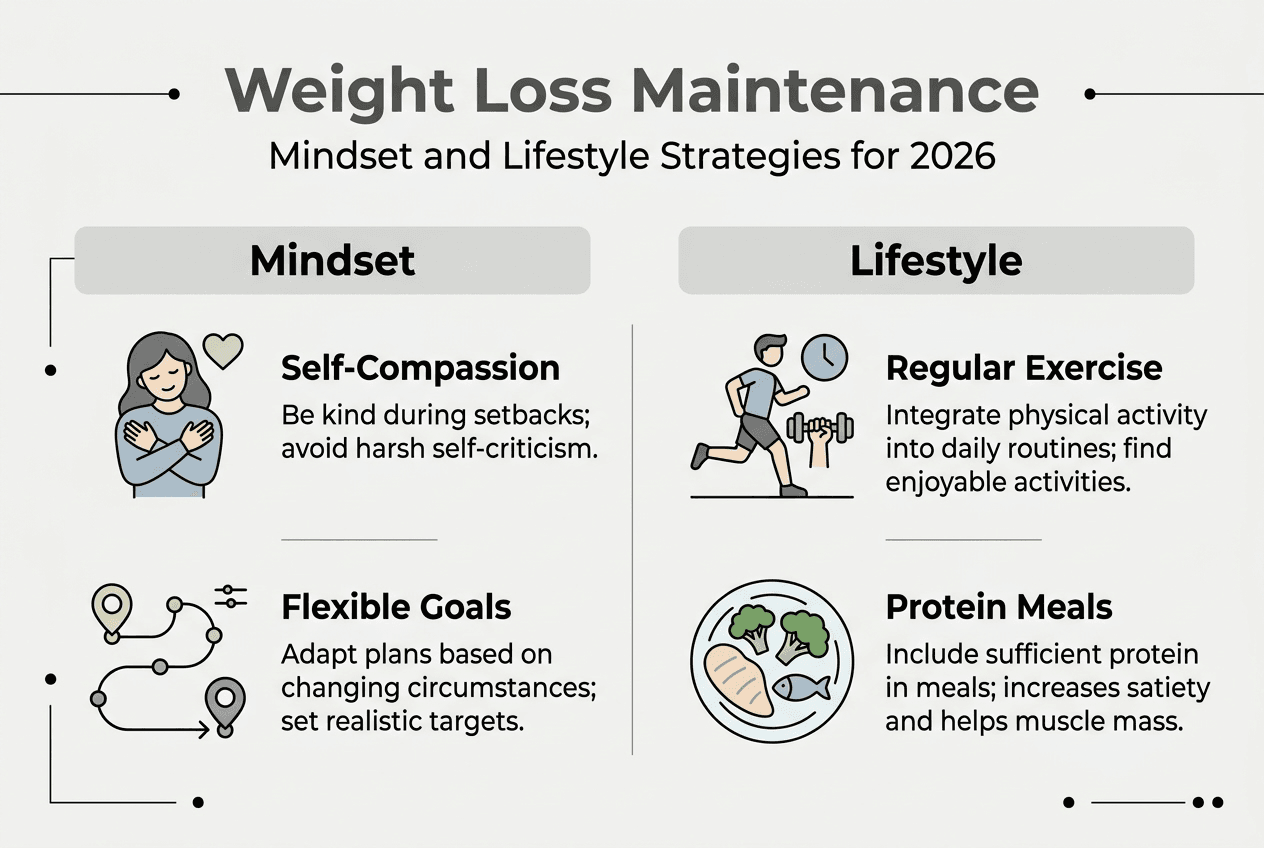
Incorporate resistance training two to three times weekly to preserve lean muscle mass. Muscle tissue burns more calories at rest than fat tissue, helping maintain metabolic rate. Strength training also improves insulin sensitivity and appetite regulation, making it easier to honor hunger and fullness cues.
Circadian alignment improves metabolic health by synchronizing eating, sleep, and activity with biological rhythms. Your body processes nutrients most efficiently during daylight hours. Late-night eating disrupts this natural rhythm, impairing glucose metabolism and increasing fat storage.
Pro Tip: Stop eating three hours before bedtime and dim lights in the evening to support melatonin production and circadian health.
| Strategy | Implementation | Expected benefit |
|---|---|---|
| High-protein meals | 25-30g protein per meal | Enhanced satiety and hormone regulation |
| High-fiber intake | 25-35g daily from whole foods | Stabilized blood sugar and prolonged fullness |
| Moderate aerobic exercise | 200-300 minutes weekly | Preserved metabolic rate and weight control |
| Resistance training | 2-3 sessions weekly | Maintained lean mass and insulin sensitivity |
| Circadian eating | Meals during daylight, stop 3hrs before bed | Optimized metabolism and reduced fat storage |
Follow these steps to build sustainable exercise habits:
- Start with activities you genuinely enjoy to ensure long-term adherence.
- Schedule workouts at the same time daily to establish routine and circadian consistency.
- Gradually increase duration and intensity over weeks to avoid burnout or injury.
- Mix aerobic and resistance training throughout the week for comprehensive benefits.
- Track sessions to maintain accountability and celebrate consistency milestones.
Your step by step weight loss guide offers detailed protocols for integrating these evidence-based practices into daily life. Combining nutrition, exercise, and circadian strategies creates a robust foundation for permanent weight control.
Monitoring progress and troubleshooting common challenges
Regular self-monitoring detects early weight regain before it becomes significant. Weigh yourself weekly at the same time of day, understanding that daily fluctuations reflect water and food volume rather than fat changes. A two to three pound increase over several weeks signals the need to reassess habits. Food and emotion journaling reveals patterns between triggers and eating episodes, helping you intervene before lapses become relapses.
Common challenges during maintenance include metabolic adaptations that persist despite your best efforts, motivation dips after the initial excitement fades, and emotional eating episodes triggered by life stress. These obstacles are normal, not failures. Expecting them reduces their power to derail your progress.
When challenges arise, revisit your mindset work first. Are you practicing self-compassion or falling into shame? Is your self-talk supportive or critical? Adjust diet and exercise as needed, but recognize that behavioral and emotional factors often drive physical setbacks. Seeking support through coaching, therapy, or community groups provides accountability and fresh perspectives.
Troubleshooting steps for managing lapses:
- Acknowledge the lapse without judgment or catastrophic thinking.
- Identify the specific trigger: emotion, environment, social pressure, or physical state.
- Brainstorm three alternative responses for the next similar situation.
- Return to your planned eating and activity schedule immediately, not Monday or next month.
- Review your mindset tools and practice one technique daily for the next week.
- Reach out for support if patterns persist beyond two weeks.
Repeated engagement in structured programs yields meaningful long-term impacts with sustainable metabolic benefits. Don’t view maintenance as a one-time achievement. It’s an ongoing practice requiring periodic refreshers and adjustments as your life circumstances change.
Key monitoring practices include:
- Weekly weigh-ins to track trends without obsessing over daily fluctuations
- Daily or weekly emotion and food journaling to maintain awareness
- Monthly review of exercise consistency and progression
- Quarterly reassessment of goals and strategies to ensure continued relevance
- Annual engagement with structured support like coaching or group programs
Our realistic long-term weight maintenance tips guide offers additional strategies for navigating the inevitable ups and downs of sustained weight control. Remember that maintenance is not perfection. It’s responding to challenges with tools and compassion rather than resignation.
Explore personalized mindset coaching for lasting change
You’ve learned evidence-based strategies for maintaining weight loss through mindset, nutrition, exercise, and circadian alignment. Now take the next step with personalized support tailored to your unique psychological and lifestyle needs. Our mindset-focused coaching empowers you to overcome emotional eating and maintain weight loss permanently by addressing the root causes of your struggles.

Access expert guidance on mindful eating, self-talk, and personalized habit shifts that fit your real life. We help you build sustainable healthy habits with empathy and expertise, not judgment or one-size-fits-all meal plans. Visit our step by step weight loss guide and mindset shift tips pages to explore proven frameworks. Discover how Mindset Over Menu transforms your relationship with food and yourself for lasting results.
How long does it take to maintain weight loss successfully?
How long does it take to maintain weight loss successfully?
Successful maintenance begins immediately after weight loss and continues indefinitely through consistent habits. The first six to twelve months present the highest risk for regain as your body adjusts to its new weight. Long-term mindset and behavioral support increase your chances of maintaining results beyond two years, when habits become more automatic.
What role does emotional eating play in weight regain?
Emotional eating is a major driver of weight regain, affecting over half of adults with obesity who use food to cope with negative feelings. Cognitive-behavioral and mindfulness techniques help reduce emotional eating by teaching alternative coping strategies. Addressing this pattern is essential for long-term success.
How can I adjust my daily routine to improve long-term weight maintenance?
Incorporate high-protein, high-fiber meals and regular moderate exercise into your schedule. Align meals, sleep, and activity with your natural circadian rhythm by eating during daylight hours and stopping three hours before bed. Practice mindfulness and self-monitoring to manage emotional eating triggers as they arise. Our weight loss daily routine tips provide detailed implementation guidance.
What should I do if I regain a few pounds?
Acknowledge the regain without panic or shame, as small fluctuations are normal. Review your recent eating, exercise, and sleep patterns to identify changes. Return to your core habits immediately rather than waiting for a perfect moment. If regain continues beyond two weeks, seek support from a coach or structured program to address underlying behavioral or emotional factors.
Can I maintain weight loss without giving up foods I love?
Yes, sustainable maintenance includes flexibility and enjoyment. Build your routine around nutrient-dense, satisfying meals while leaving room for treats in moderation. The goal is consistent healthy patterns, not perfection. Rigid rules often backfire by increasing cravings and emotional eating, so focus on balance and mindful choices instead.
Recommended
- Master mindset shift tips for lasting weight loss
- Master the role of self-talk in weight loss success
- Step by step weight loss guide for lasting change 2026
- Lose the Weight. Keep It Off. For Real. – Mindset Over Menu
- Why Reflect on Diabetes Habits: Unlocking Better Control | Diacontext