
You’ve been doing everything right. Eating well, exercising consistently, seeing steady progress. Then suddenly, the scale stops moving. You feel frustrated, confused, maybe even defeated. This stall in progress is called a weight loss plateau, and it happens to nearly everyone on a weight loss journey. The good news? Plateaus are normal, temporary, and completely breakable with the right mindset shifts and sustainable strategies. Understanding what causes these stalls and how to navigate them emotionally and practically is the key to achieving lasting weight management success.
Table of Contents
- Key takeaways
- Understanding what a weight loss plateau is
- Common causes of weight loss plateaus and how to identify them
- Effective mindset shifts to break through and prevent plateaus
- Practical strategies and habit changes to restart weight loss
- Explore Mindset Over Menu for lasting weight loss success
- Frequently asked questions
Key Takeaways
| Point | Details |
|---|---|
| Plateaus are normal | A weight loss plateau is a common, temporary phase caused by metabolic adaptation rather than personal failure, and it can be navigated with patience. |
| Mindset and habits | Breaking through requires shifts in thinking and sustainable changes to daily habits. |
| Small practical tweaks | Making small adjustments to nutrition, exercise, and mindset can restart progress. |
| Address emotional barriers | Managing emotional barriers like discouragement and cravings helps prevent regression and supports long term success. |
Understanding what a weight loss plateau is
A weight loss plateau is a frustrating but predictable phase where your weight loss progress stalls despite maintaining the same eating and exercise habits that previously worked. This pause typically lasts anywhere from a few weeks to several months, and it’s one of the most common reasons people abandon their weight loss efforts entirely.
The science behind plateaus centers on metabolic adaptation. As you lose weight, your body requires fewer calories to function because there’s simply less of you to maintain. Your metabolism slows down in response to reduced body mass and caloric intake. Weight loss plateaus occur due to metabolic adaptation where the body lowers its energy expenditure to protect against what it perceives as potential starvation. Hormonal changes also play a role. Leptin levels drop, increasing hunger signals. Thyroid hormone production may decrease slightly. Cortisol, the stress hormone, can rise when you’re in a prolonged caloric deficit, promoting fat storage and water retention.
Common signs you’ve hit a plateau include:
- No change in weight for 3 or more weeks despite consistent effort
- Measurements and clothing fit remain the same
- Energy levels feel lower than usual
- Increased hunger or cravings
- Feeling discouraged or losing motivation
Plateaus typically occur after losing 5 to 10 percent of your starting body weight, though the timing varies. Some people hit their first plateau within weeks, while others cruise for months before stalling. The emotional impact can be devastating. You might question whether your efforts matter, feel tempted to give up, or spiral into restrictive eating patterns that backfire.
“A plateau isn’t a wall. It’s a rest stop on your journey where your body is recalibrating. Understanding this transforms frustration into patience.”
Recognizing that plateaus are a normal biological response, not personal failure, is the first step toward breaking through. Your body is simply doing what it’s designed to do: adapt and survive. This knowledge removes the shame and opens the door to sustainable solutions. When you understand the step by step weight loss guide principles, you realize plateaus are checkpoints, not dead ends.
Common causes of weight loss plateaus and how to identify them
Identifying exactly why your progress has stalled is crucial for choosing the right strategy to move forward. Plateaus rarely have a single cause. Usually, several factors combine to create the perfect storm that halts your results.
Calorie intake creep is one of the sneakiest culprits. As you become more comfortable with your eating routine, portion sizes can gradually increase without you noticing. That extra tablespoon of peanut butter, the handful of nuts while cooking, or the weekend treats that become more frequent all add up. Studies show people typically underestimate their calorie intake by 20 to 30 percent. Even small increases of 100 to 200 calories daily can completely offset your deficit and stall weight loss.
Exercise adaptation happens when your body becomes efficient at the workouts you’ve been doing. The same 30-minute jog that once challenged you now burns fewer calories because your cardiovascular system has adapted. Your muscles learn to perform movements with less energy expenditure. This efficiency is great for performance but problematic for continued weight loss.

Emotional eating and stress significantly impact progress. When life gets hectic, many people unconsciously return to food for comfort. Stress triggers cortisol release, which promotes fat storage, especially around the midsection. Poor sleep compounds the problem. Even one night of inadequate rest disrupts hunger hormones, increasing ghrelin and decreasing leptin, making you hungrier and less satisfied.
Other common causes include:
- Inadequate protein intake leading to muscle loss
- Not drinking enough water, causing false weight retention
- Overestimating calories burned during exercise
- Menstrual cycle fluctuations in women
- Medication side effects affecting metabolism
Pro Tip: Keep a detailed journal for one week tracking not just food and exercise, but also sleep quality, stress levels, and emotional state. Patterns often emerge that reveal the true cause of your plateau. You might discover you eat more on high-stress days or that poor sleep correlates with increased snacking.
Adjusting habits and nutrition is essential to overcoming plateaus. The key is honest self-assessment without judgment. Look at your data objectively. Have portions grown? Has workout intensity decreased? Are you managing stress effectively? Once you identify the specific factors contributing to your plateau, you can target them with precision rather than making random changes that may not address the root cause. Building healthy weight loss habits creates a foundation that prevents future plateaus.
Effective mindset shifts to break through and prevent plateaus
Your mental approach to plateaus determines whether you break through or break down. The difference between people who achieve lasting weight loss and those who yo-yo diet repeatedly often comes down to mindset, not willpower or knowledge.
Reframe plateaus as natural phases rather than failures. When you view a plateau as evidence that your body is adapting and stabilizing, you remove the emotional charge. This is your body’s way of consolidating progress before the next phase of loss. Athletes call this periodization. Your weight loss journey needs rest periods too. Mindset shifts unlock lasting weight loss success by addressing emotional barriers that sabotage physical efforts.
Practice patience and focus on consistency over perfection. The all-or-nothing mentality destroys more weight loss journeys than any plateau ever could. You don’t need to execute your plan perfectly. You need to execute it consistently. Missing a workout or having an indulgent meal doesn’t ruin your progress. Giving up because of those moments does. Sustainable weight loss happens at a pace of 0.5 to 2 pounds per week. Sometimes it happens at zero pounds per week. Both are normal.
Use self-compassion to reduce negative self-talk and emotional eating. Research shows that self-criticism triggers stress responses that increase cortisol and promote comfort eating. When you speak to yourself with kindness, you create psychological safety that makes healthy choices easier. Instead of “I’m so weak, I can’t even stick to my plan,” try “I’m learning what works for my body, and that takes time.”
Set realistic, sustainable goals beyond the scale:
- Focus on non-scale victories like improved energy, better sleep, or increased strength
- Measure progress through how clothes fit rather than pounds lost
- Track behavioral goals such as eating vegetables with every meal or moving 30 minutes daily
- Celebrate consistency milestones like completing a full month of workouts
- Set performance goals in the gym rather than aesthetic goals
Pro Tip: Start each morning with a simple affirmation that reinforces your commitment without attaching to outcomes. Try “I choose nourishing foods and joyful movement today” or “My body is worth caring for regardless of what the scale says.” This practice builds resilience against the discouragement plateaus can trigger.
The mindset shift tips you develop during plateaus become the foundation for maintaining your weight loss long after you reach your goal. Learning to navigate frustration, uncertainty, and slow progress with grace is the ultimate skill for lasting success. These mental tools matter more than any diet hack or exercise trick.
Practical strategies and habit changes to restart weight loss
Once your mindset is aligned, implementing strategic adjustments to your nutrition, exercise, and lifestyle habits can break through even stubborn plateaus. The key is making small, sustainable changes rather than drastic overhauls that aren’t maintainable.
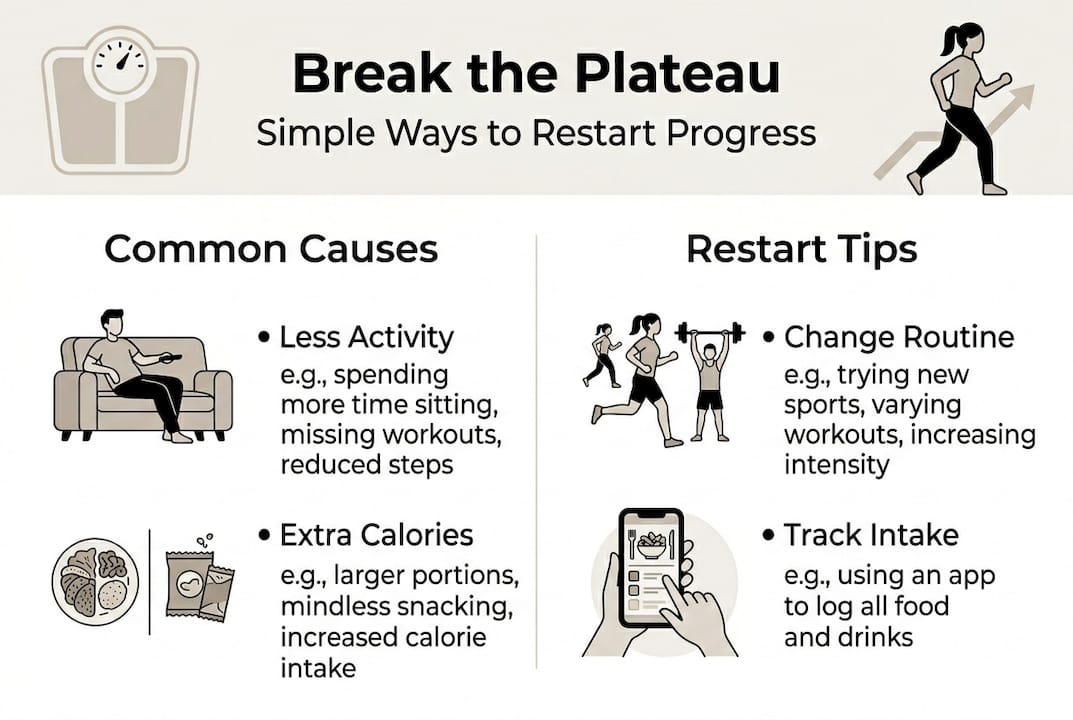
Adjust calorie intake strategically. If you’ve lost significant weight, your calorie needs have decreased. Calculate your new maintenance calories based on your current weight, then create a modest deficit of 300 to 500 calories. Some people benefit from calorie cycling, eating slightly more on workout days and less on rest days to keep metabolism responsive. Avoid dropping calories too low. Eating under 1200 calories for women or 1500 for men typically backfires by slowing metabolism further.
Change your workout routine to introduce new challenges. Your body craves novelty. If you’ve been doing steady-state cardio, add interval training. If you’ve focused on cardio, incorporate strength training. Increase weights, try new exercises, or change the order of your routine. Even small modifications signal your body to adapt again, burning more calories in the process. Small nutrition and exercise adjustments can effectively break plateaus without extreme measures.
| Strategy Type | Plateau-Busting Approach | Why It Works |
|---|---|---|
| Nutrition | Increase protein to 25-30% of calories | Preserves muscle, increases satiety, higher thermic effect |
| Nutrition | Add one refeed day weekly at maintenance calories | Restores leptin levels, prevents metabolic slowdown |
| Exercise | Switch from steady cardio to HIIT twice weekly | Higher calorie burn, continued metabolic boost post-workout |
| Exercise | Add resistance training 2-3 times weekly | Builds muscle that increases resting metabolic rate |
| Lifestyle | Prioritize 7-8 hours quality sleep nightly | Regulates hunger hormones, reduces stress eating |
| Lifestyle | Practice stress management techniques daily | Lowers cortisol, reduces emotional eating triggers |
Incorporate recovery and stress management into your routine. Overtraining without adequate recovery can elevate cortisol chronically, promoting fat retention and muscle breakdown. Schedule rest days. Try yoga, meditation, or simply taking walks in nature. These aren’t luxuries but essential components of successful weight loss.
Emphasize sustainable habit formation rather than quick fixes:
- Build one new habit at a time rather than overhauling everything
- Focus on adding positive behaviors before removing negative ones
- Create environmental supports like meal prepping or laying out workout clothes
- Track habits, not just outcomes, to maintain motivation
The maintain weight loss mindset strategies you implement now prepare you for lifelong success. Think of plateau-breaking as practice for maintenance. The skills you develop adjusting your approach, staying patient, and trusting the process become invaluable when you reach your goal weight. Starting with solid weight loss habits for beginners creates a foundation that minimizes plateaus and makes them easier to overcome when they occur.
Explore Mindset Over Menu for lasting weight loss success
Breaking through weight loss plateaus requires more than just knowing what to do. It demands a complete shift in how you approach weight management, focusing on sustainable mindset changes and habit formation rather than quick fixes. That’s exactly what Mindset Over Menu specializes in.

Our platform offers comprehensive strategies specifically designed for people who are tired of yo-yo dieting and ready for lasting transformation. Explore our detailed guides on maintaining weight loss through mindset strategies that address the emotional and psychological barriers keeping you stuck. Discover our step by step weight loss guide that walks you through creating a personalized plan built on science-based principles and real-life application. Whether you’re currently experiencing a plateau or want to prevent future stalls, the resources at Mindset Over Menu provide expert guidance tailored to your unique journey toward sustainable success.
Frequently asked questions
Why do weight loss plateaus happen?
Weight loss plateaus occur because your body adapts to reduced calorie intake and decreased body mass by lowering metabolic rate. Hormonal changes, including reduced leptin and thyroid hormones, also contribute to this natural survival mechanism.
How long do plateaus usually last?
Most plateaus last between 3 to 8 weeks, though some can extend longer depending on individual factors. The duration depends on how quickly you identify and address the underlying causes through strategic adjustments to nutrition, exercise, and lifestyle habits.
What are signs you’re experiencing a plateau?
Key signs include no weight change for 3 or more consecutive weeks despite consistent effort, measurements staying the same, clothes fitting identically, and potentially increased hunger or decreased energy. True plateaus persist despite maintaining your weight loss behaviors.
How can I stay motivated during a plateau?
Focus on non-scale victories like improved energy, strength gains, or better sleep quality. Practice self-compassion rather than self-criticism. Set process goals around habits you control rather than outcome goals tied to the scale. Remember that plateaus are temporary phases, not permanent barriers, and use the step by step weight loss guide to stay on track.
Are plateaus a sign I’m doing something wrong?
No, plateaus are a normal biological response to weight loss, not evidence of failure. Your body is designed to adapt and protect against perceived threats to survival. Plateaus signal it’s time to reassess and adjust your approach, not that you’ve done something wrong or should give up.
Recommended
- How to maintain weight loss: mindset strategies 2026
- Step by step weight loss guide for lasting change 2026
- Master the role of self-talk in weight loss success
- Weight loss habits for beginners: build lasting routines 2026