
You’ve been eating well, moving your body, and still feeling like something is working against you. Here’s a thought: it might literally be. The trillions of microbes living in your gut influence your metabolism, your hunger hormones, and even your cravings. This isn’t about blaming your willpower. It’s about understanding a piece of the puzzle that most people completely overlook. In this guide, we’ll break down what the science actually says, what it doesn’t say, and how you can use simple daily habits to work with your gut instead of against it.
Table of Contents
- Gut microbiome 101: What lives inside you
- How your gut shapes weight loss: Science explained
- Habits that strengthen your gut and support weight loss
- Limitations, nuances, and why mindset still matters
- Your 4-step plan: Apply gut science to your weight goals
- Apply your knowledge: Unlock habits, mindset, and weight loss
- Frequently asked questions
Key Takeaways
| Point | Details |
|---|---|
| Gut health impacts weight | A diverse, balanced microbiome influences appetite, metabolism, and inflammation linked to weight control. |
| Diet diversity matters most | Eating 30 or more types of plant foods weekly supports the healthiest and most stable gut environment. |
| Habits and mindset drive success | Lasting weight loss relies on sustainable habits, supportive routines, and positive thinking as much as on gut health. |
| No one-size-fits-all formula | Individual responses to gut-friendly interventions vary, so experiment and monitor for your best results. |
Gut microbiome 101: What lives inside you
To grasp how gut health affects your weight, start by understanding the microscopic community inside you.
Your gut microbiome is made up of trillions of microorganisms, including bacteria, fungi, and viruses, all living in your intestines. Think of it like a rainforest. The more diverse the species, the healthier and more resilient the whole system.
These microbes do a lot of heavy lifting. They digest fiber, produce vitamins, regulate your immune system, and play a direct role in your metabolism. One of their most important jobs is producing short-chain fatty acids (SCFAs), which are compounds made when bacteria break down fiber. SCFAs affect energy, appetite, and inflammation, and they help trigger satiety hormones like GLP-1 and PYY that tell your brain you’re full.
Here’s a quick look at what a diverse microbiome does for you:
| Function | What it means for you |
|---|---|
| Fiber digestion | Produces SCFAs that signal fullness |
| Vitamin production | Supports energy and immune health |
| Metabolism regulation | Influences how calories are processed |
| Immune modulation | Reduces chronic low-grade inflammation |
| Hormone signaling | Affects hunger and satiety cues |
A few things that quietly wreck microbiome diversity:
- A typical Western diet high in processed foods and low in fiber
- Chronic stress (yes, your gut feels it too)
- Overuse of antibiotics
- Poor sleep
- Sedentary lifestyle
Building good weight management habits starts with understanding that your gut is a living system that responds to how you live, not just what you eat.
How your gut shapes weight loss: Science explained
Now that you know what’s living in your gut, let’s see exactly how these microbes can tilt the scales for or against your weight loss.
When gut bacteria break down fiber, they produce SCFAs that signal fullness and reduce hunger. Simple enough. But here’s where it gets interesting. In people with obesity, this process often breaks down. Obesity-related dysbiosis means less microbial diversity and increased gut permeability, sometimes called “leaky gut,” which can fuel more inflammation and make weight loss even harder.

Less diversity. More inflammation. Harder to feel full. It’s a frustrating cycle.
So what does the research say about fixing it?
| Intervention | Effect on weight | Notes |
|---|---|---|
| Probiotic supplements | Modest reduction (~1 kg) | Varies by strain and duration |
| High-fiber diet | Supports satiety and diversity | Most consistent evidence |
| Fermented foods | Boosts microbial diversity | Yogurt, kefir, kimchi |
| Fecal transplants | Mixed results | Still experimental in adults |
Stat to know: A meta-analysis found that probiotic supplementation led to an average weight difference of about 1.05 kg compared to placebo. Real, but modest.
This is why weight loss mindset strategies matter so much alongside gut work. The gut can support your efforts, but it’s not doing the heavy lifting alone. If you want a step-by-step weight loss guide that puts all of this into context, that’s a great place to start.
Habits that strengthen your gut and support weight loss
But what does this mean for your day-to-day? These are the habits that strengthen your gut and unlock better weight outcomes.
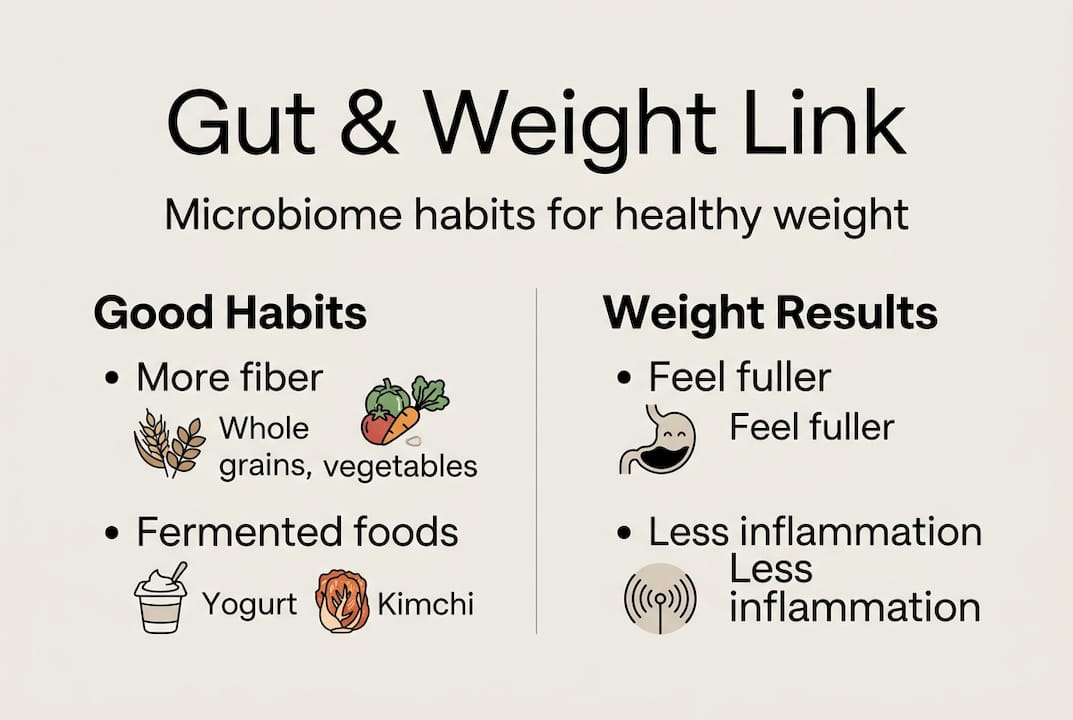
The single most impactful thing you can do is eat more variety. Eating 30+ plant foods weekly boosts beneficial microbes and diversity in ways that a single superfood never could. That includes vegetables, fruits, legumes, whole grains, nuts, seeds, and herbs. Yes, herbs count.
Here’s a practical approach:
- Add one new plant food each week. Don’t overhaul everything at once. Just add.
- Include prebiotic foods daily. Onions, garlic, oats, bananas, and leeks feed your good bacteria.
- Add fermented foods a few times a week. Yogurt, kefir, sauerkraut, and kimchi introduce beneficial bacteria directly.
- Move your body consistently. Physical activity supports microbial diversity, not just calorie burn.
- Prioritize sleep. Poor sleep disrupts your gut just as much as a bad diet.
- Manage stress actively. Mindfulness, nature walks, and social connection all buffer against microbiome damage.
Pro Tip: Diversity counts more than quantity. Rotating your vegetables and fruits regularly gives your gut a wider range of fibers to work with. Swap your usual apple for a pear. Try purple cabbage instead of green. Small swaps, big impact.
If you’re just getting started, weight loss habits for beginners is a great resource for building these routines without feeling overwhelmed. And if you’re curious about what to avoid, the research on artificial sweeteners and gut health might surprise you. Also worth bookmarking: daily habits for weight management for a broader look at sustainable routines.
Limitations, nuances, and why mindset still matters
Before you overhaul your routine, here’s what most people miss about the gut-weight connection.
There is no single “perfect” microbiome for weight loss. The Firmicutes/Bacteroidetes ratio, once thought to be a reliable marker, is now considered inconsistent across populations. Your gut is deeply personal. What works for someone else may not work the same way for you.
Here’s what we know for sure:
- Gut health can support weight loss, but it doesn’t replace a calorie deficit
- Short-term weight loss is still driven by energy balance
- Long-term maintenance requires high-fiber, high-protein diets, regular exercise, and consistent self-monitoring
- Individual responses to dietary changes vary widely
- Stress and sleep affect your gut as much as food does
“While microbiome modulation aids, calorie restriction drives short-term weight loss; long-term success integrates diet quality and mindset for adherence.”
This is where mindset becomes the real game-changer. You can eat all the kimchi in the world, but if stress is through the roof and sleep is a mess, your gut will feel it. Building a sustainable weight loss mindset is what holds everything together. The mindset shifts for weight loss that matter most aren’t dramatic. They’re quiet, consistent, and cumulative. And the way you talk to yourself through the process? That matters more than most people realize. Self-talk for weight loss is worth exploring if you haven’t already.
Your 4-step plan: Apply gut science to your weight goals
Ready to take action? Here’s a practical, four-step plan that brings gut health and weight goals together.
This isn’t about perfection. It’s about stacking small wins until they become your normal.
- Eat for diversity. Aim for 30 or more different plant foods each week. Add fermented foods like yogurt or kimchi a few times a week. Your gut bacteria will thank you.
- Move consistently. Aim for 200 to 300 minutes of movement weekly. Walks count. Dancing counts. Whatever gets you moving and keeps you moving.
- Prioritize mindset. Use a simple tracking method and practice positive self-talk. Progress feels invisible until it isn’t. Keep going.
- Practice stress management. Meditation, quality sleep, and self-compassion aren’t soft extras. They directly support your gut and your goals.
Pro Tip: Don’t try to do all four at once. Pick one habit this week and do it well. Stack the next one on top when the first feels easy. That’s how long-term weight maintenance actually works.
For a deeper look at building these habits into your life, check out healthy weight loss habits and the full weight loss step-by-step guide for a structured path forward.
Apply your knowledge: Unlock habits, mindset, and weight loss
You now have the science. You have the habits. And you have a plan. But knowing and doing are two very different things, and that gap is exactly where most people get stuck.

At Mindset Over Menu, we help you close that gap. Whether you’re just starting out or you’ve been at this for a while and need a fresh approach, our resources are built around real-life application, not just theory. From maintaining your weight loss mindset to following a structured weight loss guide, we’ve got practical tools that meet you where you are. Explore our sustainable weight loss resources and start building the habits that actually stick, one small win at a time.
Frequently asked questions
Can improving gut health help you lose belly fat?
A healthier gut may support modest reductions in visceral fat and waist circumference, but probiotic supplementation works best alongside a balanced diet and regular exercise, not as a standalone fix.
What foods improve gut health for weight management?
Fiber-rich plants like beans, oats, onions, and bananas feed your good bacteria, while fermented foods like yogurt and kimchi add beneficial microbes directly. High-fiber, plant-based diets consistently show the strongest evidence for boosting gut diversity.
Does everyone respond the same way to gut health changes?
Not at all. Individual microbiome variability means that two people eating the same foods can have very different gut and weight responses, which is why personalized habits matter more than one-size-fits-all plans.
Are probiotics or prebiotics more important for weight loss?
Both play a role. Prebiotics feed the beneficial bacteria already living in your gut, while probiotics introduce new beneficial strains. Prebiotic and probiotic foods work best together as part of a varied, plant-rich diet.
Recommended
- Real-life weight loss guide: 5-10% success in 2026
- Master the role of self-talk in weight loss success
- How to maintain weight loss: mindset strategies 2026
- Why mindset shifts unlock lasting weight loss success