
You’ve lost the weight, felt incredible, and then slowly watched the pounds creep back. You’re not alone. Studies reveal that 80-95% of people regain weight within three to five years after weight loss. This staggering statistic isn’t a reflection of your willpower or commitment. Understanding why relapse happens biologically and behaviorally can transform your approach to sustainable weight management. This article explores the complex mechanisms behind weight regain and reveals mindset coaching strategies that create lasting change.
Table of Contents
- Key takeaways
- Understanding the biology behind weight regain
- Behavioral and psychological factors driving relapse
- Comparing weight loss outcomes and strategies for lasting success
- Practical coaching techniques to prevent relapse and sustain weight loss
- Explore professional mindset and weight loss coaching
- Frequently asked questions
Key Takeaways
| Point | Details |
|---|---|
| Biology drives regain | Your resting metabolic rate can drop by 10 to 25 percent after weight loss, while hunger hormones surge, promoting regain. |
| Metabolic hormonal shifts | Ghrelin rises and leptin falls after weight loss, creating persistent hunger that challenges maintenance. |
| Preserve muscle mass | Maintaining muscle through adequate protein intake of 0.7 to 1 gram per pound of body weight and resistance training three times weekly helps counteract metabolic slowdown. |
| Mindset and values | Mindset coaching helps identify meaningful reasons for staying on track beyond the scale, strengthening intrinsic motivation. |
| Self monitoring and activity | Ongoing self monitoring and regular physical activity are essential for sustaining weight loss and preventing relapse. |
Understanding the biology behind weight regain
Your body doesn’t celebrate weight loss the way you do. When you shed pounds, your physiology launches a coordinated defense to restore what it perceives as lost reserves. Metabolic adaptation reduces resting metabolic rate by 10-25% after weight loss, meaning you burn fewer calories at rest than someone who naturally weighs the same. This isn’t laziness or poor metabolism. It’s your body’s survival mechanism.
Hormonal changes amplify this biological pushback. Ghrelin, your hunger hormone, surges while leptin, which signals fullness, plummets. These shifts create persistent hunger that feels impossible to ignore. Your appetite regulation centers in the brain become hyperactive, scanning your environment for food opportunities. Meanwhile, changes in gut microbiota composition can influence nutrient absorption and fat storage patterns.
Set-point theory explains why your body fights so hard. Your physiology has a preferred weight range it defends through multiple systems working simultaneously. When you drop below this range, your body activates compensatory mechanisms:
- Increased appetite signals and food-seeking behavior
- Reduced energy expenditure through metabolic slowdown
- Enhanced nutrient absorption efficiency
- Decreased spontaneous physical activity and fidgeting
- Altered thyroid function affecting metabolism
| Biological Factor | Impact on Weight Regain | Timeline |
|---|---|---|
| Resting metabolic rate | Decreases 10-25% | Persists 1+ years |
| Ghrelin (hunger hormone) | Increases significantly | Sustained elevation |
| Leptin (satiety hormone) | Decreases substantially | Slow recovery |
| Fat-free mass | Loss reduces calorie needs | Immediate |
| Gut microbiome | Shifts toward fat storage | Gradual change |
Pro Tip: Preserving muscle mass through adequate protein intake (0.7-1 gram per pound of body weight) and resistance training three times weekly can counteract metabolic slowdown by maintaining your calorie-burning engine. Building weight loss mindset strategies alongside physical changes creates a foundation that biology alone can’t undermine.
Behavioral and psychological factors driving relapse
While biology sets the stage, your thoughts and habits write the script. Irrational beliefs about weight control create invisible barriers to maintenance. You might think you can return to old eating patterns once you reach your goal, or that occasional lapses mean total failure. These cognitive distortions sabotage progress before you realize what’s happening.
Behavioral factors including irrational beliefs and self-deception play a key role in relapse prevention. Self-deception is particularly insidious. You convince yourself that skipping workouts for a week won’t matter, or that you’re eating less than you actually are. This mental fog prevents the honest self-assessment necessary for course correction.
Mindset coaching techniques like motivational interviewing address these psychological roadblocks directly. Rather than prescribing rigid rules, motivational interviewing explores your ambivalence about change and strengthens your intrinsic motivation. It helps you identify what truly matters beyond the number on the scale. When your reasons for maintaining weight loss connect to deeper values, like playing with grandchildren or feeling confident in your body, you build resilience against temporary setbacks.
Habit strength determines whether healthy behaviors stick or fade. Strong habits operate automatically, requiring minimal willpower. Weak habits demand constant conscious effort, depleting your mental resources. The difference between someone who maintains weight loss and someone who relapses often comes down to habit automaticity:
- Morning weigh-ins become as routine as brushing teeth
- Meal planning happens every Sunday without negotiation
- Movement breaks punctuate desk work naturally
- Stress triggers healthy coping instead of emotional eating
Self-monitoring stands out as one of the most powerful behavioral tools. Tracking your weight, food intake, physical activity, and emotional states creates awareness that prevents gradual drift. You catch the two-pound gain before it becomes twenty. Research consistently shows that people who maintain weight loss habits through regular self-weighing and food logging have significantly lower regain rates.

Pro Tip: Building consistent routines around high-risk situations prevents common pitfalls. If evenings trigger mindless snacking, establish a non-food ritual like tea and reading. Addressing mindset shifts for weight loss helps you recognize emotional eating patterns before they derail progress.
Comparing weight loss outcomes and strategies for lasting success
The statistics on weight regain paint a sobering picture, but successful maintainers prove lasting change is possible. Understanding what separates these groups reveals actionable patterns you can replicate. Many people regain 30-50% of lost weight within one to five years after dieting or drug therapy. The numbers worsen over time, with some studies showing complete regain by year five.
Successful maintainers, however, share distinct characteristics. They engage in high levels of physical activity, averaging 60-90 minutes of moderate exercise daily. They weigh themselves frequently, often multiple times per week. They maintain consistent eating patterns across weekdays and weekends, avoiding the restrict-and-binge cycle. These behaviors aren’t willpower feats. They’re sustainable systems built through practice and support.
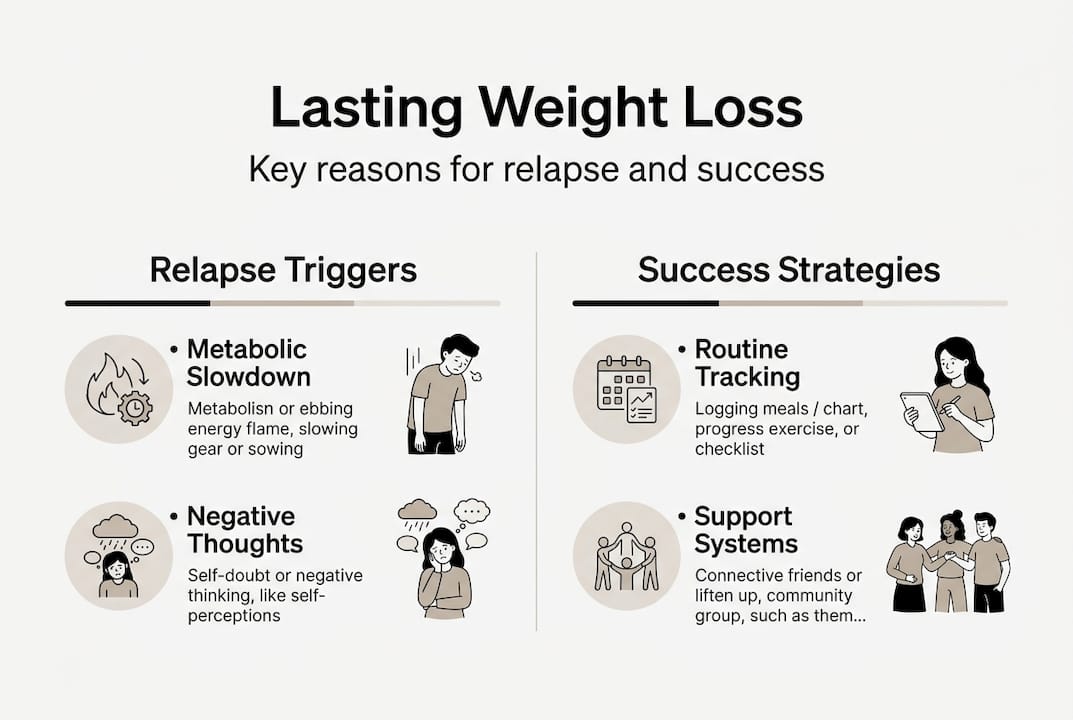
Repeated participation in structured programs shows surprising benefits. While initial weight loss might be smaller with each attempt, long-term regain actually decreases. This suggests that each program teaches skills and awareness that compound over time, even if immediate results diminish. The learning curve for sustainable weight management extends beyond a single diet attempt.
Set-point theory and environmental factors interact in complex ways. Your biological set-point establishes a baseline your body defends, but your environment shapes where within that range you settle. An environment filled with ultra-processed foods, sedentary conveniences, and stress will push you toward the upper end. An environment supporting whole foods, regular movement, and stress management allows you to maintain the lower end.
Steps for sustainable weight maintenance
- Establish a consistent physical activity routine of at least 200-300 minutes weekly, mixing cardio and strength training
- Implement daily self-monitoring through regular weigh-ins and food awareness practices
- Maintain dietary consistency across all days, avoiding extreme restriction or weekend indulgence patterns
- Engage with mindset coaching to address psychological barriers and build intrinsic motivation
- Create environmental supports like meal prep systems, workout accountability, and stress management practices
- Develop relapse prevention plans that identify triggers and establish specific coping strategies
| Approach | Typical Outcome | Maintainer Strategy | Long-term Result |
|---|---|---|---|
| Diet alone | 80-95% regain in 3-5 years | Diet + behavior change | 50-60% maintain 5+ years |
| Weight loss drugs | 30-50% regain after stopping | Drugs + lifestyle coaching | Improved maintenance |
| Restrictive eating | Yo-yo cycling | Flexible, consistent patterns | Stable weight |
| Minimal activity | Metabolic adaptation | 60+ min daily movement | Sustained loss |
| No self-monitoring | Gradual drift | Weekly weigh-ins + tracking | Early intervention |
The lasting weight loss guide provides frameworks that integrate these evidence-based strategies into daily life without overwhelming complexity.
Practical coaching techniques to prevent relapse and sustain weight loss
Knowing what works matters little without tools to implement it. Cognitive behavioral therapy targets the distorted thinking patterns that undermine maintenance. You learn to recognize all-or-nothing thoughts like “I ate cookies, so the whole day is ruined.” CBT helps you reframe these thoughts into balanced perspectives: “I had cookies, and I can make my next meal nutritious.”
Integrating CBT, motivational interviewing, and relapse prevention training improves long-term weight control by addressing multiple dimensions simultaneously. Motivational interviewing enhances your readiness for change by exploring your ambivalence honestly. Instead of forcing yourself to want something you don’t, you examine the pros and cons of change openly. This process often reveals that your resistance stems from unrealistic expectations or fear of failure rather than genuine preference for old patterns.
Self-monitoring tools extend beyond the scale. Food logging increases awareness of portion sizes, eating triggers, and nutritional patterns. Mood tracking reveals connections between emotions and eating behaviors you might miss otherwise. Physical activity logs show whether you’re meeting movement goals consistently or just on motivated days. These data points create objective feedback that cuts through rationalization.
Habit strength building requires deliberate practice. Start with implementation intentions: specific if-then plans that automate decisions. “If it’s 7 AM, then I weigh myself” removes negotiation from the equation. “If I feel stressed at work, then I take a five-minute walk” provides a predetermined response to emotional triggers. These micro-commitments compound into robust behavioral systems.
Structured relapse prevention plans transform vague intentions into concrete action steps. Identify your high-risk situations:
- Social events with abundant food and alcohol
- Stressful work periods that disrupt routines
- Travel that removes familiar structure
- Emotional upheavals like relationship conflicts or loss
- Physical illness or injury limiting activity
For each trigger, develop specific coping strategies. If travel disrupts your routine, pack resistance bands and research hotel gym hours before departure. If stress triggers emotional eating, establish three alternative responses like calling a friend, journaling, or taking a bath. Having predetermined plans removes the need to generate solutions while emotionally activated.
Pro Tip: Emphasize incremental progress and self-compassion to maintain motivation through inevitable setbacks. Perfectionism kills more weight loss journeys than any food choice. Building master mindset shift tips and establishing healthy weight loss habits creates psychological flexibility that adapts to life’s unpredictability.
Explore professional mindset and weight loss coaching
Sustainable weight loss isn’t a solo journey, despite what diet culture suggests. Professional coaching integrates mindset and behavioral tools tailored to your unique challenges, creating accountability and expertise that self-directed efforts often lack. Working with someone who understands both the biological mechanisms and psychological barriers transforms abstract knowledge into personalized action.

Mindset Over Menu offers resources and strategies specifically designed for people tired of the relapse cycle. The weight loss mindset strategies guide and lasting change weight loss guide provide frameworks grounded in behavioral science rather than quick fixes. Connecting with experts who prioritize sustainable change over rapid results helps you overcome the common relapse challenges that derail well-intentioned efforts. Explore how professional support at Mindset Over Menu can bridge the gap between knowing what to do and actually doing it consistently.
Frequently asked questions
Why do so many people regain weight after dieting?
Weight regain stems from your body’s biological defense mechanisms that activate after weight loss. Metabolic adaptation reduces your calorie burn by 10-25%, while hormonal shifts increase hunger and decrease satiety signals. These physiological changes persist for years, creating constant pressure to regain weight. Behavioral factors compound this biology when old eating patterns resume without the awareness and habit systems necessary for maintenance.
Can mindset coaching really make a difference in preventing weight relapse?
Mindset coaching addresses the psychological barriers that biology alone can’t explain. Techniques like cognitive behavioral therapy help you identify and reframe distorted beliefs about weight control, while motivational interviewing strengthens your intrinsic motivation for change. Research shows that integrating these approaches with traditional weight loss methods significantly improves long-term maintenance rates. The difference lies in building sustainable behavioral systems rather than relying on temporary willpower.
What are effective habits to build for long-term weight maintenance?
Successful maintainers consistently practice regular physical activity (60-90 minutes daily), frequent self-weighing (at least weekly), and consistent eating patterns across all days. Self-monitoring through food logs and activity tracking creates awareness that prevents gradual drift. Psychological strategies like self-compassion, mindful eating, and predetermined responses to triggers support these physical habits. The key is building automatic routines that require minimal conscious effort, freeing your willpower for unexpected challenges rather than daily decisions.
Recommended
- How to maintain weight loss: mindset strategies 2026
- Weight loss habits for beginners: build lasting routines 2026
- Master the role of self-talk in weight loss success
- Why mindset shifts unlock lasting weight loss success